
Resin Driveway Maintenance and Cleaning
Resin bound driveways are one of the lowest-maintenance surfacing options available, but they do benefit from simple regular care. A basic cleaning routine keeps the surface looking its best and prevents the build-up of organic matter that can affect drainage and appearance over time.
This guide covers everything you need to know about resin driveway maintenance — from routine cleaning and pressure washing to oil stain removal, weed prevention, and winter care.
Can You Pressure Wash a Resin Driveway?
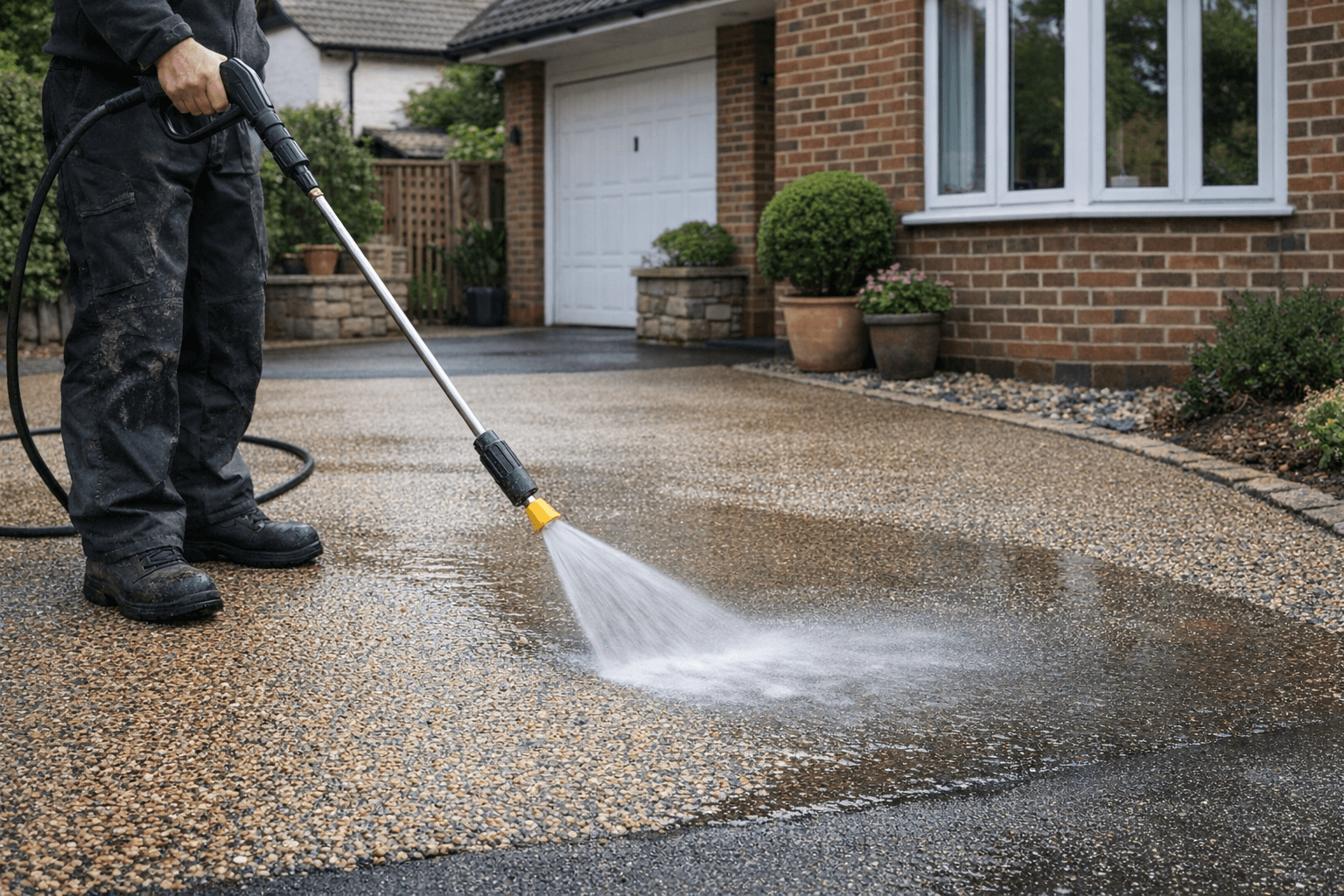
Yes, you can pressure wash a resin driveway safely — and it is the most effective way to deep clean the surface. The key is using the right settings to avoid damaging the resin bond between the aggregate stones.
Use a fan nozzle (not a pinpoint jet) at a moderate pressure setting — around 100-120 bar is ideal for most domestic machines. Hold the nozzle at least 30cm from the surface and keep it moving. Avoid concentrating pressure on one spot, edges, or joints for extended periods.
For best results, work in overlapping passes and wash debris towards a drain or garden border. A mild detergent designed for resin or paving can help lift stubborn marks. Avoid harsh chemicals, bleach, or industrial degreasers which can discolour or damage the resin.
Unsure which cleaning method is safe for your surface age and finish? Call 07413 521600 for free advice.
How to Remove Oil Stains From a Resin Driveway
Oil stains are one of the most common maintenance issues for any driveway surface. On resin bound driveways, the porous texture can absorb oil if it is not treated quickly, but prompt action usually prevents permanent marking.
For fresh oil spills, absorb as much as possible immediately using cat litter, sand, or absorbent granules. Leave for 30 minutes, sweep away, then clean the area with warm soapy water and a stiff brush. For older or deeper stains, use a proprietary resin-safe degreaser — apply, leave for the recommended time, then rinse with a pressure washer on a gentle setting.
Avoid using petrol, white spirit, or aggressive solvents as these can dissolve the resin binder and cause permanent damage to the surface finish.
- Act fast — absorb fresh oil with cat litter or sand within minutes
- Use warm soapy water and a stiff brush for light stains
- Use a resin-safe degreaser for older or deeper oil marks
- Never use petrol, white spirit, or bleach on resin surfaces
- Rinse thoroughly after any cleaning product application
Resin Driveway Weed Prevention
One of the biggest advantages of resin bound driveways is that they are highly resistant to weed growth. Unlike block paving, there are no joints or gaps for roots to establish. However, airborne seeds can settle in surface dust or debris and germinate if the surface is not kept clean.
The best weed prevention is regular sweeping. A quick brush once a week removes the fine layer of organic matter that seeds need to germinate. If you notice small weeds starting to appear, they are almost always surface-rooted and can be pulled out by hand or removed with a gentle pressure wash.
Avoid weedkillers containing glyphosate directly on the resin surface — these can discolour some aggregate types. If persistent weeds appear at edges or transitions, targeted hand-pulling is safer than chemical treatment.
Winter Care and Seasonal Maintenance Checklist
Resin bound surfaces are frost-resistant by design, but a few seasonal checks help maintain performance year-round. In autumn, clear fallen leaves regularly as decomposing organic matter can stain the surface and reduce drainage. Before winter, inspect edging, expansion joints, and drainage channels for any debris blockages.
In winter, avoid using rock salt directly on resin surfaces — it can leave white residue and potentially affect some aggregate types. If de-icing is needed, use a resin-safe de-icer or grit lightly. Never use a metal shovel to clear snow; a plastic shovel or soft broom is safe.
- Spring: sweep thoroughly, inspect for winter damage, light pressure wash
- Summer: check for oil stains from cars, clean as needed, enjoy the low maintenance
- Autumn: clear leaves weekly, check drainage channels, inspect edges
- Winter: avoid rock salt, use resin-safe de-icer if needed, clear snow with a plastic shovel
Protect Your Driveway Through Winter
Get a maintenance checklist matched to your surface and usage.
When to Call a Professional
Most resin driveway maintenance is straightforward and can be done by the homeowner. However, some situations benefit from professional attention. If you notice cracking, significant aggregate loss, or areas where water is no longer draining through the surface, book an inspection sooner rather than later.
Small cracks or patches can be repaired by cutting out the affected area and re-laying with fresh resin and aggregate. Professional repairs are colour-matched as closely as possible, though a slight variation from the original is normal. Early intervention prevents small issues from becoming expensive replacements.