
Resin Driveway Cost Guide (2026)
This guide gives you a realistic sense of what a resin bound driveway project involves and roughly what to budget before you request a quote.
We have also included representative customer situations — people who switched from other surfaces, and a few who tried going it alone first. Every project is different, and the figures here are starting points, not fixed prices.
What Does a Resin Driveway Cost per m2?
Material costs for resin bound surfacing typically start from around £30–£50 per square metre depending on the aggregate blend and resin system chosen. These figures cover materials only — labour is not included and is priced separately based on your specific project.
Labour varies significantly depending on access, groundwork requirements, project complexity, and time on site. This is one reason two driveways of the same size can carry very different final costs.
If your existing surface needs replacing — full excavation, new sub-base, and compaction — expect this to add considerably to the overall budget. That is why an on-site survey is essential before any price is confirmed.
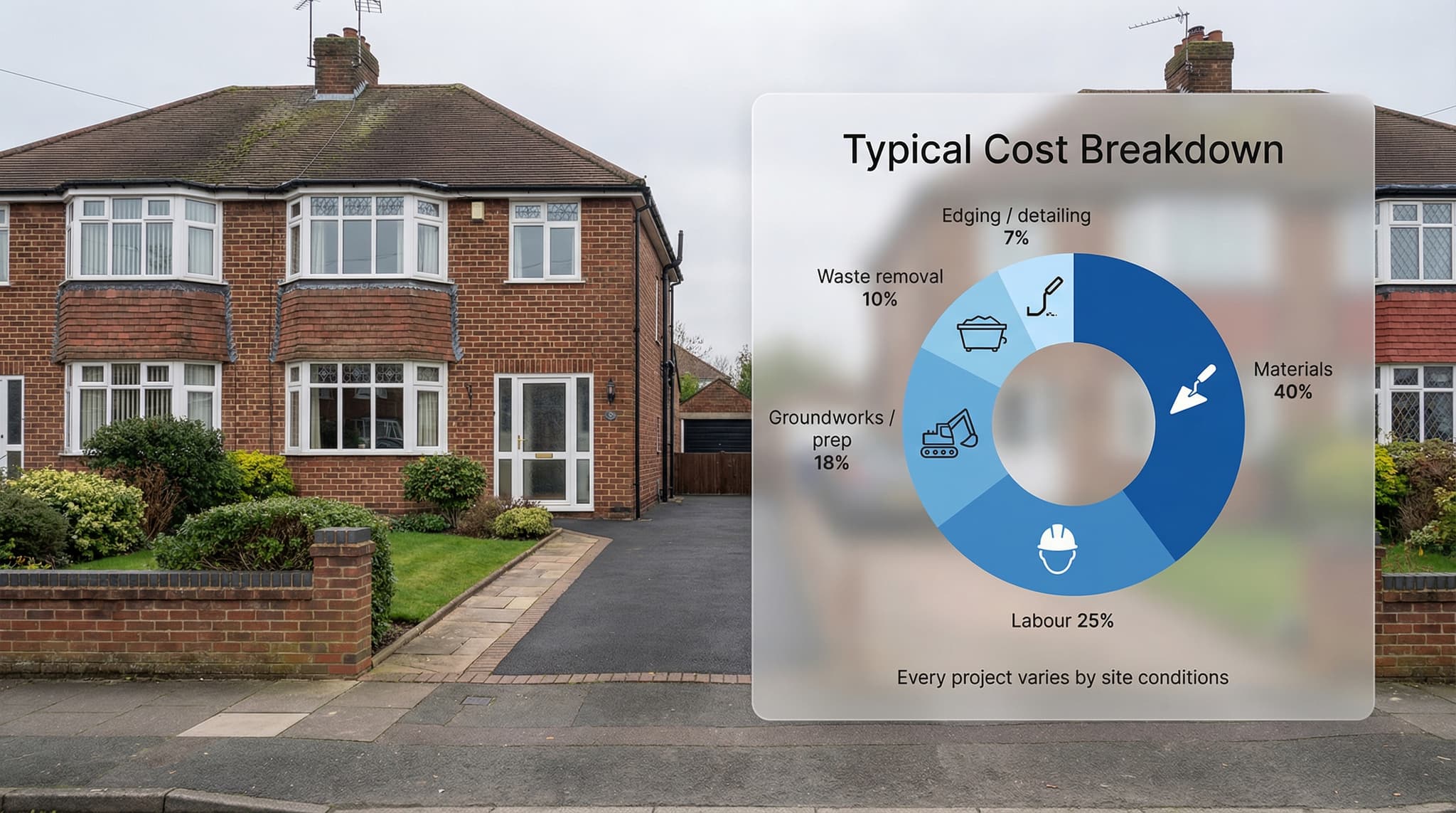
Need a realistic cost range for your driveway, not a headline price? Call 07413 521600 for free advice.
What Might a Full Project Cost?
The figures below give a broad sense of installed project costs including materials and labour across common driveway sizes. They are indicative ranges only — your actual quote may fall outside these depending on site conditions.
The wide range on larger projects reflects how much groundwork, drainage, aggregate choice, and layout complexity can shift the final figure. Only a site visit gives you an accurate number.
- 1 car driveway (approx. 20m2) — budget from: £1,500–£2,500+
- 2 car driveway (approx. 40m2) — budget from: £3,000–£5,500+
- 3 car driveway (approx. 80–100m2) — budget from: £6,500–£30,000+
- Large premium layouts with full excavation, drainage, reflective aggregate, and detailed edging sit at a very different price point to straightforward overlays
Compare installed cost with DIY
Indicative figures based on a 40m² driveway with a structurally sound base. Every property varies.
Select Installed or DIY to compare.
What Pushes the Price Up?
Base condition is usually the single biggest variable. A sound existing surface keeps costs down considerably, while a failed or cracked base that needs full excavation and a new sub-base significantly increases project cost.
Specification choices also matter. Premium aggregate blends, feature edging, and complex layouts can materially increase both labour and total budget.
- Base condition: sound base keeps costs down; failed base requiring new sub-base raises cost significantly
- Size and layout: larger open driveways are efficient; tight access, irregular shapes, curves, and split levels add labour
- Aggregate choice: standard natural gravels sit lower; marble, quartz, and reflective glass blends carry a noticeable premium
- Edging and detailing: feature borders, step nosings, and curved edges increase both quality and cost
- Resin system: UV-stable resin protects long-term appearance and warranty performance
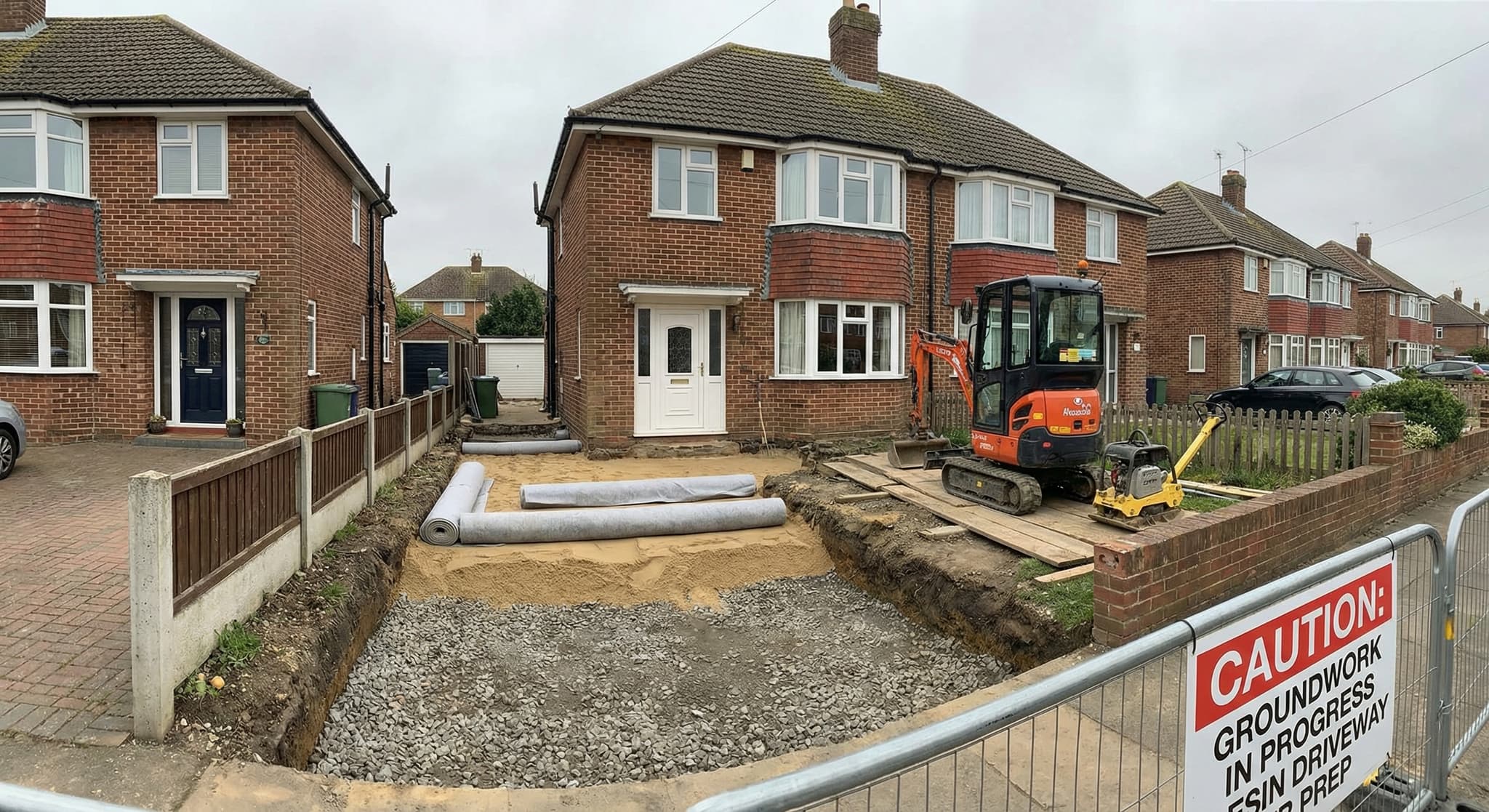
How Does Resin Compare to Other Surfaces?
Resin is not always the cheapest upfront option, but it often provides stronger long-term value than higher-maintenance alternatives.
Over a 20-year period, resin frequently works out more cost-effective than block paving once ongoing maintenance is factored in.
- Tarmac: from £45–£65/m2 — affordable but limited design, typically resurfaced within 10–15 years
- Concrete: from £55–£80/m2 — durable but prone to cracking and staining over time
- Block paving: from £70–£120/m2+ — attractive but requires regular maintenance and weed management
- Gravel: from £25–£45/m2 — lowest upfront cost but needs regular topping up
- Resin bound: from £65/m2+ — low maintenance, fully permeable, 15–25 year lifespan
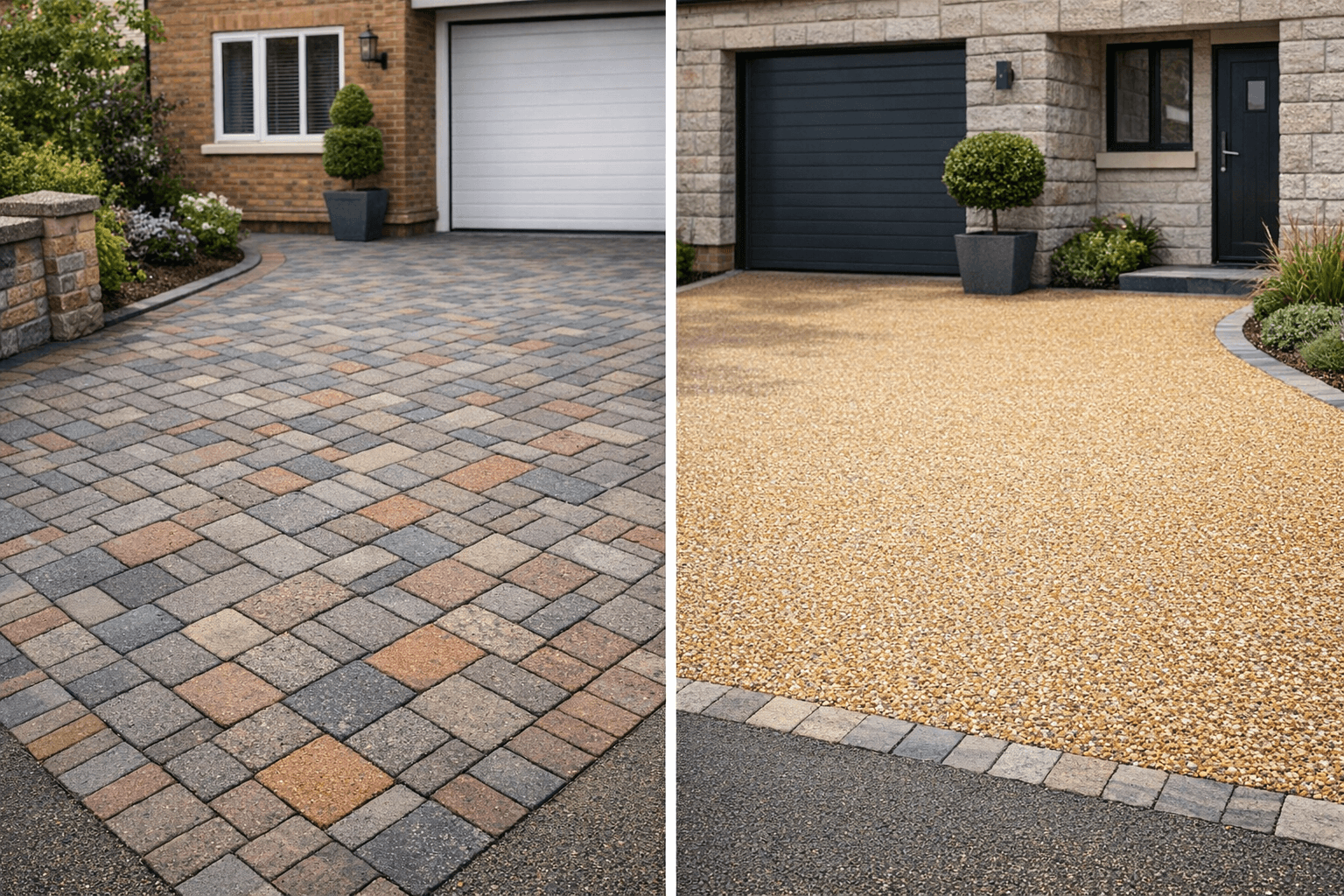
Want a like-for-like comparison for your current surface?
"I Already Had a Driveway — Why Would I Replace It?"
This is the question we hear most often. The honest answer is: you might not need to. If your existing tarmac or concrete is structurally sound, we can often overlay directly onto it, which keeps costs significantly lower.
What many homeowners discover later is that the true cost of an old surface is not just maintenance spend, but years of patching, cleaning, and repeated repairs that still do not deliver the finish they want.
Representative scenario — Sarah, Eastbourne: switched from tired block paving after repeated re-sanding and weeding. Over a multi-year period, maintenance spend and hassle made resin feel like better long-term value. Two years later, upkeep is mostly sweeping.
Representative scenario — Mark, Lewes: replaced a cracked concrete drive after multiple patch repairs. Survey confirmed the underlying base was still sound for overlay, reducing disruption and avoiding unnecessary excavation.
A well-installed resin driveway is widely cited by local agents as one of the strongest exterior upgrades for kerb appeal before selling.
"Can I Just Do It Myself to Save Money?"
It is a fair question, and DIY resin kits are widely available. Some people do complete small areas successfully. But many call-outs come from homeowners who attempted a DIY install and then needed full remedial work.
Timing is critical. Resin must be mixed and laid inside a tight working window. Move too slowly and it starts curing before a consistent finish is achieved. Move too fast and the mix quality suffers.
Base preparation is where most DIY installs fail. Hidden movement, inadequate drainage, or poor compaction can lead to delamination, bubbling, or cracking after one or two winters.
Representative scenario — Tom, Hailsham: attempted a 20m2 DIY area after online research. Inconsistent finish and curing issues meant the surface could not be salvaged. Removal plus professional reinstallation cost more than starting with a proper quote.
For anything beyond a small test patch, the risk often outweighs the saving.
- DIY failure usually means paying twice: removal first, then proper installation
- Resin timing window is unforgiving without an experienced crew
- Groundwork quality is the biggest factor in long-term performance
Additional Costs to Account For
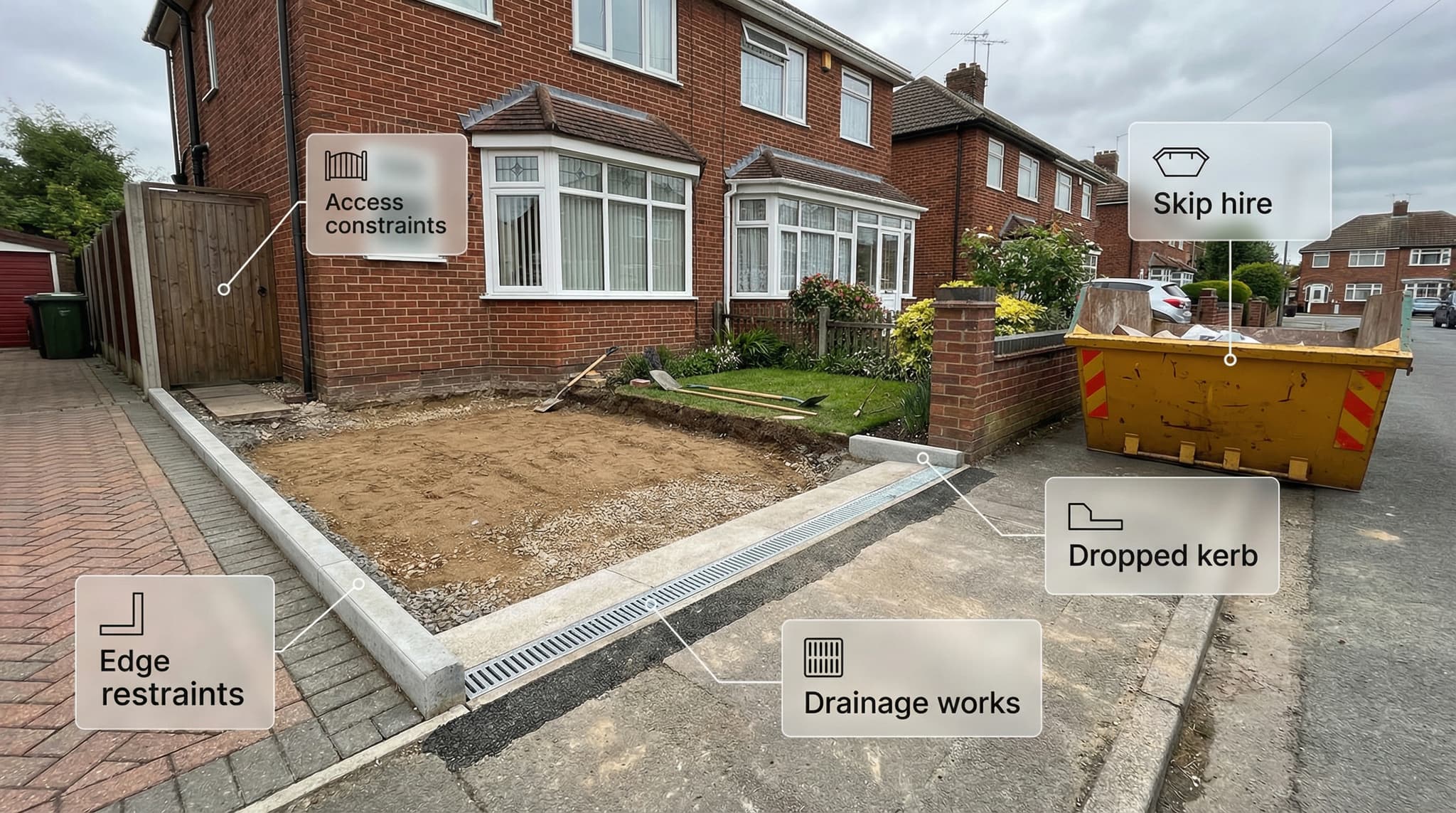
A complete driveway budget should include more than surface installation. A thorough installer will identify these during survey stage and include them in a written quote.
- Skip hire: removing existing surface material typically costs from £160 upwards
- Dropped kerb: council charges typically range from £600–£1,500
- Drainage works: soakaway or drainage upgrades can add significantly to budget
- Edge restraints: aluminium or steel borders are priced per linear metre
- Access constraints: restricted access can increase labour time on site
How to Get the Best Value
Ask every installer to break down their quote. Preparation works, base specification, resin brand and system, aggregate, edging, drainage, and warranty terms should all be itemised so you can compare like-for-like.
A few things worth asking any installer: Is the resin UV-stable? What stone is used for the sub-base, and is it SuDS-compliant? Does the quote include waste removal and edging? Can I see a completed project nearby?
The cheapest quote is rarely the best value. Thin resin application, poor aggregate quality, or inadequate base assessment are common causes of premature failure, and remediation usually costs far more than the original saving.
Call 07413 521600 or request a free quote and we will be back in touch within 24 hours.
- Is the resin UV-stable?
- Is the sub-base specification SuDS-compliant?
- Does the quote include waste removal and edging?
- Can you see a completed local project before deciding?
Costed project advice
Get an Itemised Cost Quote
Share size, base condition, and postcode for a realistic fixed-scope estimate.