
Pros of Resin Driveways
Resin bound driveways offer a combination of practical and visual benefits that other surfacing options struggle to match. The smooth, seamless finish looks clean and modern while the permeable structure handles drainage naturally — no planning permission required under SuDS regulations.
Resin surfaces are low-maintenance compared to block paving (no weeds growing between joints) and gravel (no loose stones to sweep or replenish). They also resist staining better than plain concrete and come with a 15-25 year lifespan when installed correctly.
- Permeable surface — SuDS compliant, no planning permission needed in most cases
- Wide colour and aggregate choice for a personalised finish
- Smooth, even surface suitable for wheelchairs, pushchairs, and cyclists
- Low maintenance — no jointing to weed, no loose material to sweep
- UV-stable options that resist fading and yellowing
- 15-25 year lifespan with proper installation and care
- Slip-resistant textured finish in all weather conditions
- Can be laid over existing tarmac or concrete in many cases
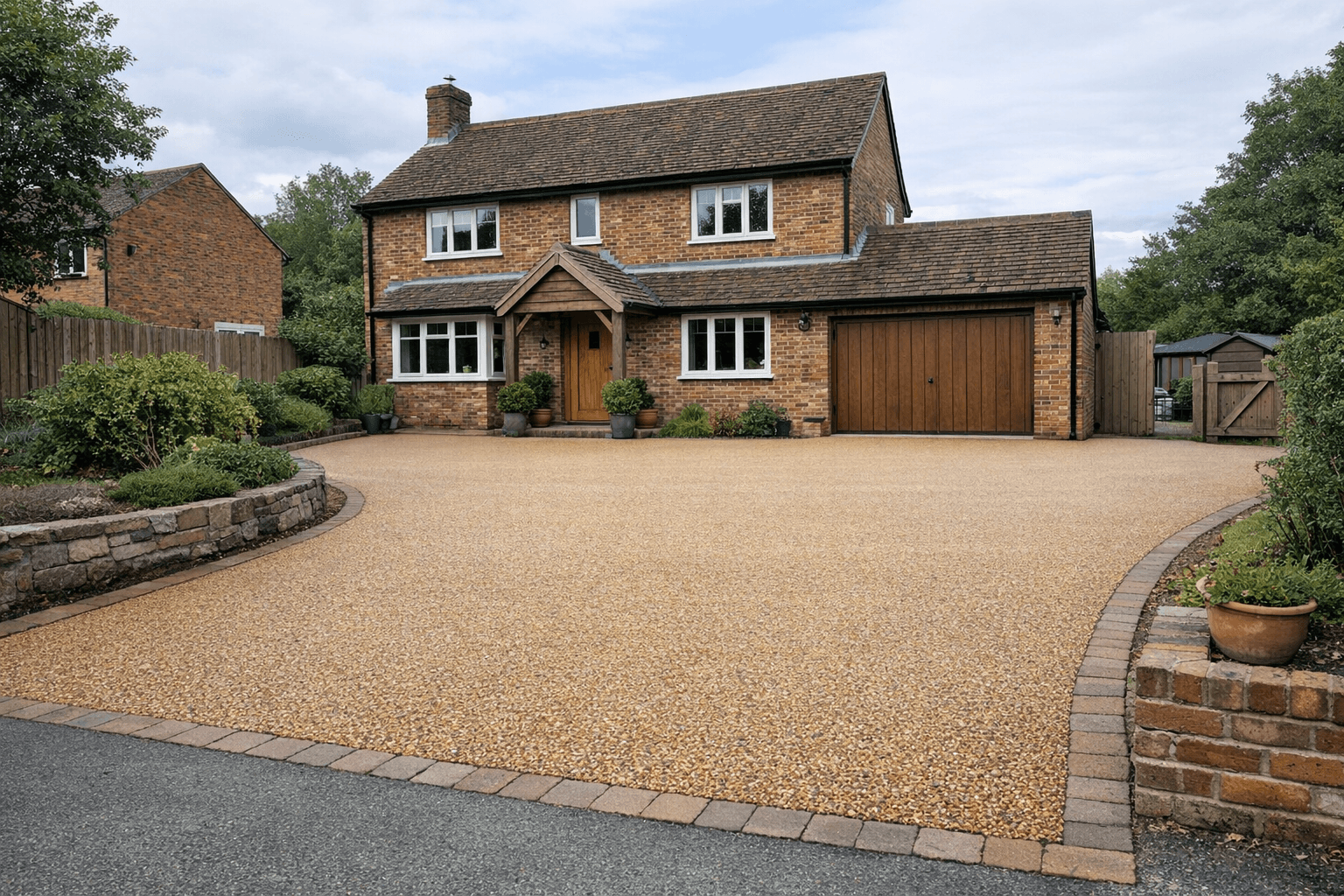
Cons of Resin Driveways
No surface material is perfect, and resin driveways have genuine limitations that are worth understanding before committing. Being informed about these will help you set realistic expectations and avoid disappointment.
The most common concern is cost. Resin driveways are more expensive per square metre than tarmac or gravel, though they are often comparable to or cheaper than high-quality block paving when long-term maintenance is factored in.
- Higher upfront cost than tarmac or gravel (installed projects commonly start from around £65 per m2+)
- Installation is weather-dependent — resin cannot be laid in rain or below 5 degrees Celsius
- Quality varies significantly between installers — poor installation leads to early failure
- Staining from oil or chemicals can be difficult to remove if not treated quickly
- Repairs to small areas can sometimes show a colour difference to the original surface
- Not suitable for HGV traffic or very heavy commercial vehicles
- DIY installation is not recommended — professional laying is essential
Want an honest fit-check for your property, budget, and usage? Call 07413 521600 for free advice.
Common Resin Bound Driveway Problems
Most resin driveway problems stem from poor installation rather than the material itself. Understanding these common issues helps you ask the right questions when choosing an installer and spot early warning signs.
Cracking is the most frequently reported problem. It is almost always caused by inadequate sub-base preparation or ground movement, not by the resin layer itself. A properly specified sub-base with correct compaction prevents this in the vast majority of cases.
Loose aggregate (stones coming away from the surface) is another common complaint. This happens when the resin-to-aggregate ratio is wrong or when the surface was disturbed before curing completed. A reputable installer will use calibrated mixing equipment and protect the surface during the curing window.
- Cracking — caused by poor sub-base preparation or ground movement
- Loose aggregate — wrong resin-to-stone ratio or premature traffic
- Discolouration — cheap resin can yellow; UV-stable resin avoids this
- Drainage failure — incorrect falls or blocked permeable layers
- Edge lifting — insufficient edge restraints or poor bonding to edging
Is a Resin Driveway Slippery When Wet?
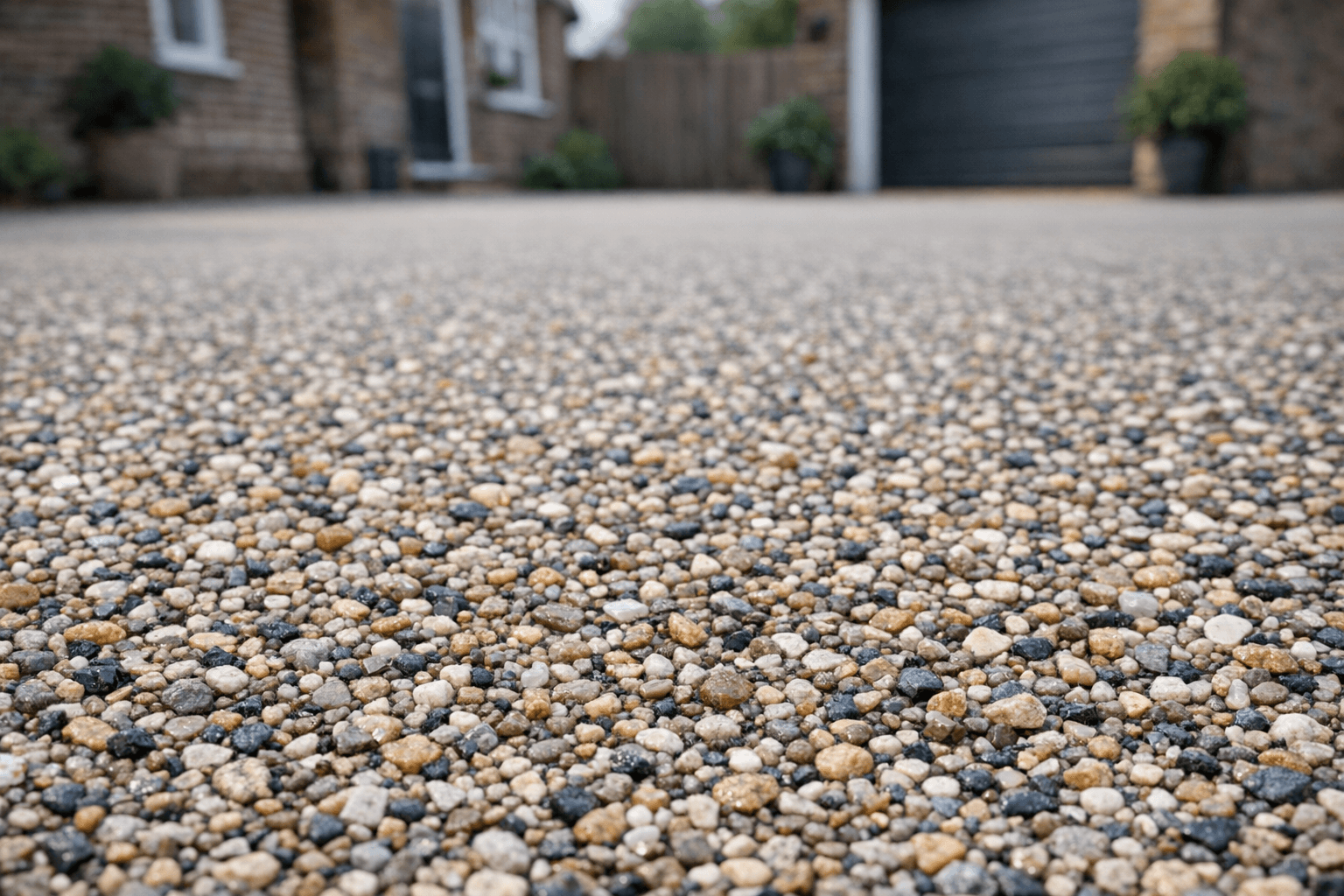
This is one of the most common concerns from homeowners considering resin. Resin bound driveways have a naturally textured surface created by the exposed aggregate stones, which provides grip in wet conditions. The surface is generally not slippery when wet under normal use.
The permeable structure also helps because rainwater drains through the surface rather than sitting on top, reducing the film of water that makes other surfaces dangerous. This makes resin bound driveways safer than polished concrete, smooth tarmac, or glazed paving in wet weather.
However, if algae or moss builds up on any outdoor surface — including resin — it can become slippery. Regular cleaning prevents this. Our maintenance guide covers the simple cleaning steps needed to keep the surface safe year-round.
Resin Driveway Lifespan: How Long Do They Last?
A professionally installed resin bound driveway typically lasts 15-25 years before the surface needs replacing. Some installations last longer depending on traffic levels, base quality, and how well the surface is maintained.
The main factor affecting resin driveway lifespan is the quality of the sub-base. A driveway laid on a properly compacted, stable base will last significantly longer than one laid on a compromised surface. Resin type also matters — UV-stable aliphatic resin resists yellowing and degradation far better than cheaper aromatic alternatives.
Compared to other surfaces, resin driveways sit in the mid-to-upper range for longevity. Tarmac typically lasts 10-15 years, block paving 20-25 years (with regular maintenance), and concrete 25-30 years. Resin offers strong value when maintenance effort is factored in.
Decide With Realistic Expectations
We'll walk through trade-offs before you commit to any surface.
Is a Resin Driveway Worth It?
For most homeowners, a resin driveway represents good long-term value. The combination of kerb appeal, low maintenance, and natural drainage makes it a practical choice for residential properties in the UK.
The key to a successful resin driveway is choosing the right installer. A professional team with a proven track record, clear warranty terms, and proper base preparation will deliver a surface that justifies the investment over many years.
If budget is a primary concern and kerb appeal is less important, tarmac may be a more cost-effective choice. If you want maximum design flexibility and don't mind a higher initial outlay, resin is hard to beat. For a full cost breakdown, see our resin driveway cost guide.