
What You Get for Your Money
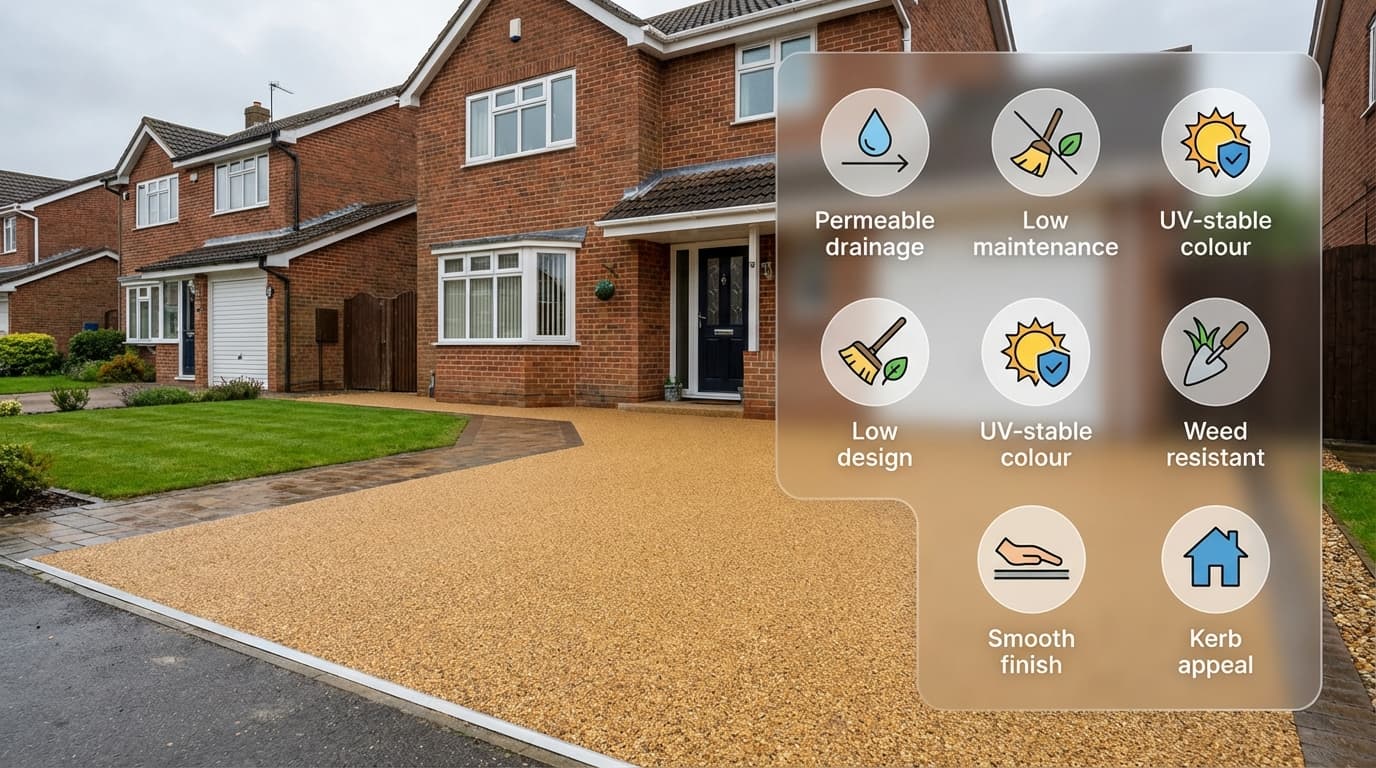
A resin driveway is not the cheapest option upfront, but it delivers a combination of features that alternatives cannot match individually. Installed projects commonly start from around £65 per m2+, and you get a seamless, permeable surface that drains rainwater naturally, a wide choice of aggregate colours, UV-stable materials that resist fading, and a finish that requires minimal ongoing maintenance.
Compared to block paving (which needs regular re-sanding and weed control), gravel (which needs topping up and fights weeds constantly), or tarmac (which fades and softens in heat), resin bound delivers a notably lower lifetime maintenance cost.
For homeowners who value kerb appeal, resin consistently enhances a property's front elevation. Estate agents in the South East report that a well-installed resin driveway makes a measurable positive impression on potential buyers.
Longevity Compared to Other Surfaces
A properly installed resin bound driveway with a sound sub-base has a typical lifespan of 15 to 25 years. This is longer than tarmac (10 to 15 years before resurfacing), competitive with block paving (15 to 25 years with ongoing maintenance), and far longer than gravel (which needs refreshing every few years).
The key qualifier is 'properly installed'. Resin driveway failures almost always trace back to poor base preparation, incorrect resin-to-aggregate ratios, or installation in unsuitable weather conditions. Choosing a reputable installer with verifiable experience is the single most important factor in getting the longevity you pay for.
Need a clear value verdict based on lifespan and upkeep, not sales claims? Call 07413 521600 for free advice.
The Maintenance Reality
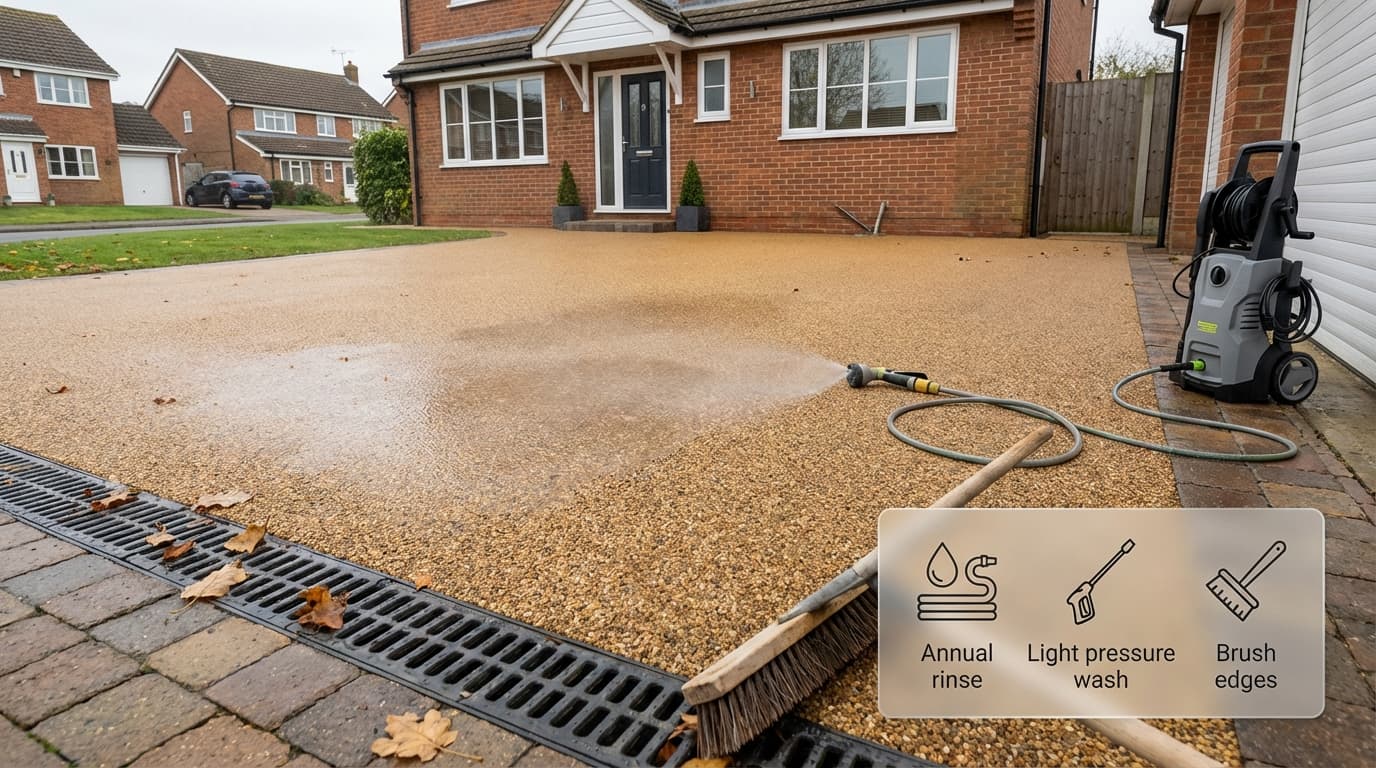
Resin driveways are genuinely low maintenance, but they are not zero maintenance. An annual wash with a garden hose removes surface dirt. A light pressure wash every year or two addresses any algae or moss that accumulates in shaded areas.
Weeds are rare on resin bound surfaces because the finish is sealed, but seeds can occasionally germinate in organic matter that collects at edges or in drainage channels. These are easily removed by hand or with a stiff brush — far less effort than the ongoing weed battle that block paving and gravel demand.
Oil and fuel spills should be cleaned promptly. Resin is resistant to staining but not impervious, especially if spills are left to sit for extended periods.
When a Resin Driveway Is NOT Worth It
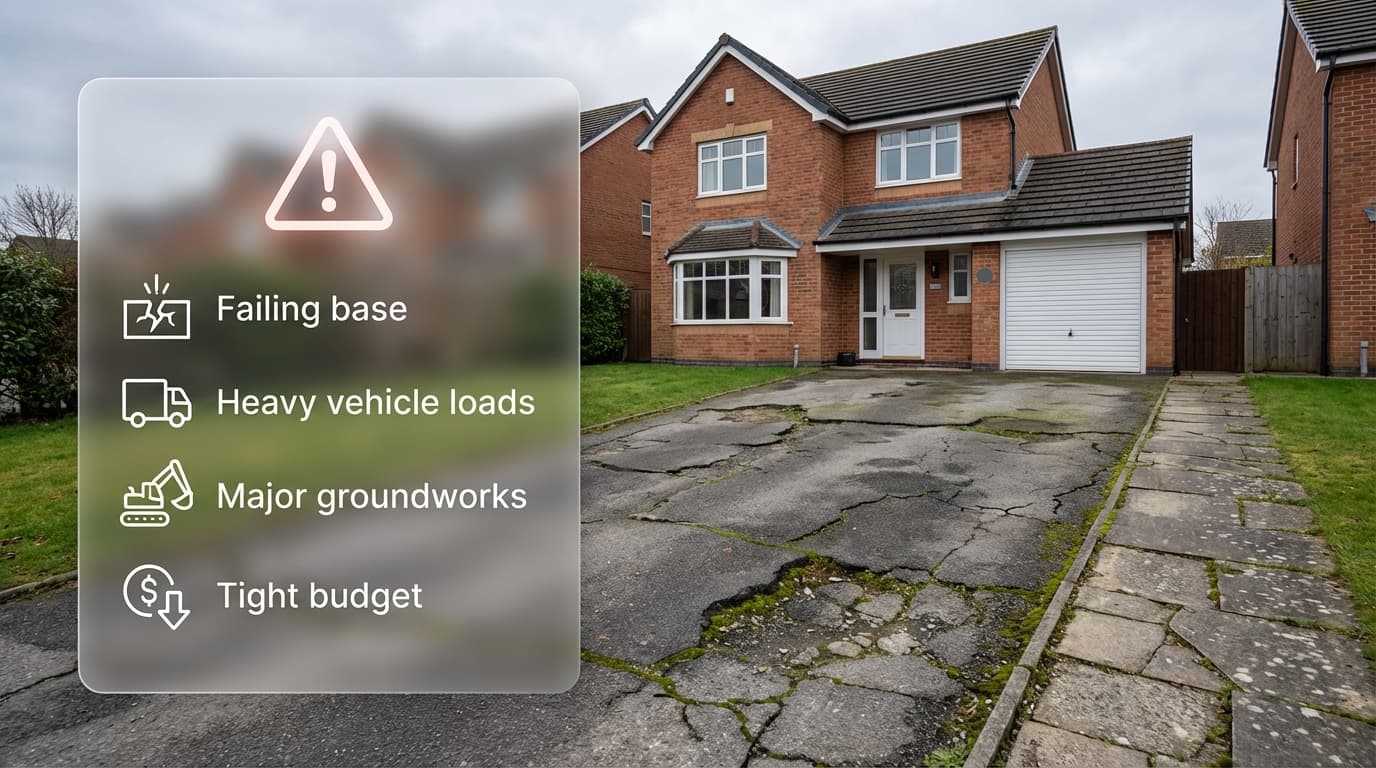
Resin is not the right choice for every situation. If your budget is very tight and you simply need a functional vehicle surface, tarmac will cost less upfront and do the job adequately.
Properties with very heavy vehicle traffic — such as regular HGV or large van access — may experience more wear than resin is designed for. Resin bound surfaces are rated for domestic vehicle use (cars and light vans), not heavy commercial loads.
If the existing base is in very poor condition and needs complete replacement, the total project cost (groundwork plus resin) can make the investment harder to justify compared to a simpler tarmac or concrete solution. In these cases, the groundwork dominates the budget regardless of the surface material chosen.
Check If Resin Is Worth It for Your Property
We'll flag where resin is a good fit and where it isn't.
The Verdict: Is It Worth It?
For most homeowners who want a driveway that looks good, drains properly, lasts 15 to 25 years, and does not demand constant maintenance, resin bound is worth the investment. The upfront cost is moderate rather than cheap, but the long-term cost of ownership is among the lowest of any driveway surface.
The critical success factor is installation quality. A well-installed resin driveway on a sound base delivers excellent value. A poorly installed one — regardless of how cheap it was — becomes expensive to fix. Invest in the installer, not just the material.