Resin Patio Design Ideas
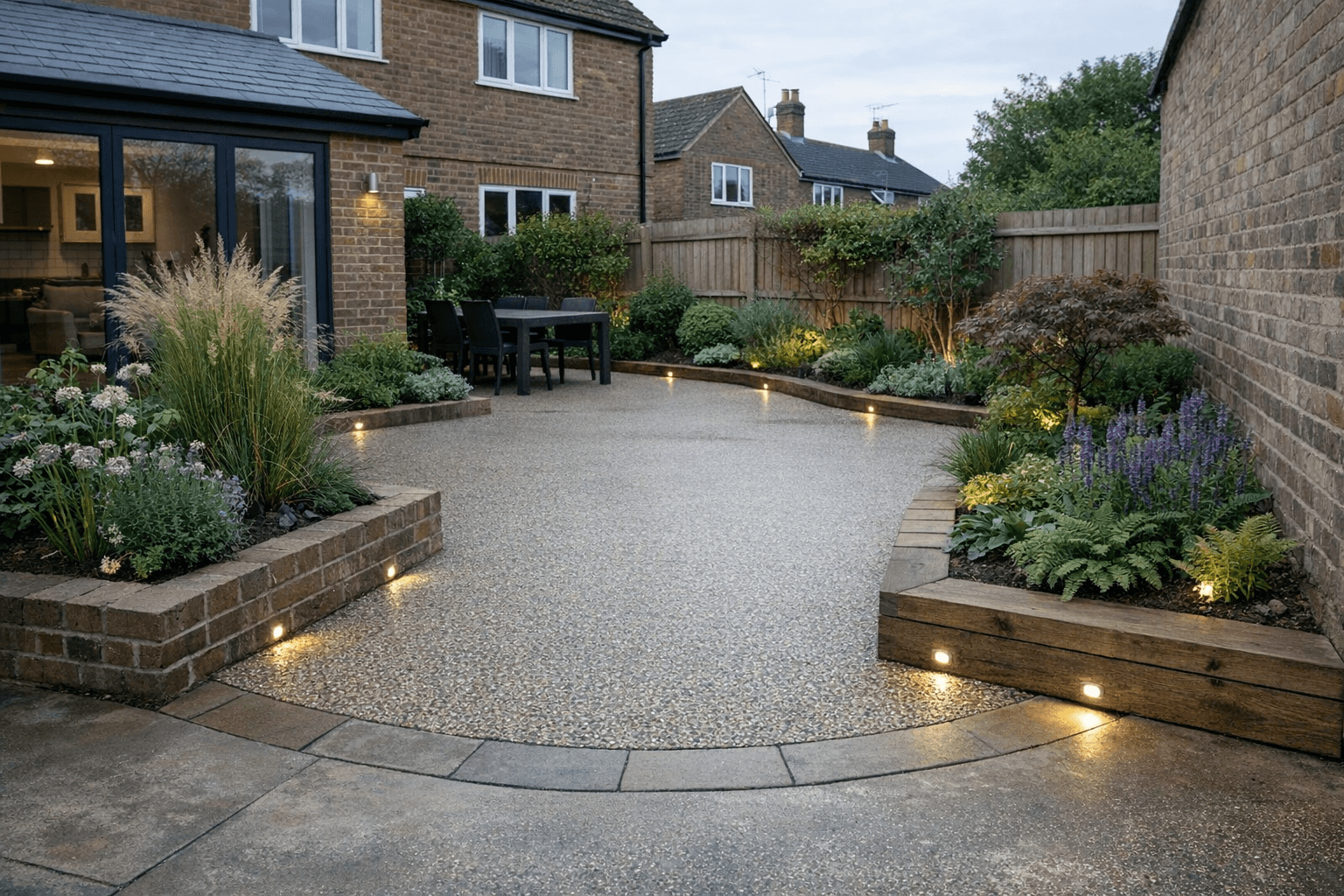
Resin bound patios offer a seamless, elegant surface that transforms outdoor living spaces. Unlike paving slabs with their visible joints and potential for weed growth, resin provides a continuous finish that looks clean and feels smooth underfoot.
The material is naturally slip-resistant and performs well in wet conditions — an important consideration for UK gardens. The permeable surface means rainwater drains through naturally, eliminating the standing puddles that can make paved patios unusable after rainfall.
Whether you want a sleek modern patio, a warm Mediterranean-inspired outdoor room, or a natural stone effect that blends with garden planting, resin bound surfacing gives you the design flexibility to create exactly the look you want.
Modern Resin Patio Ideas
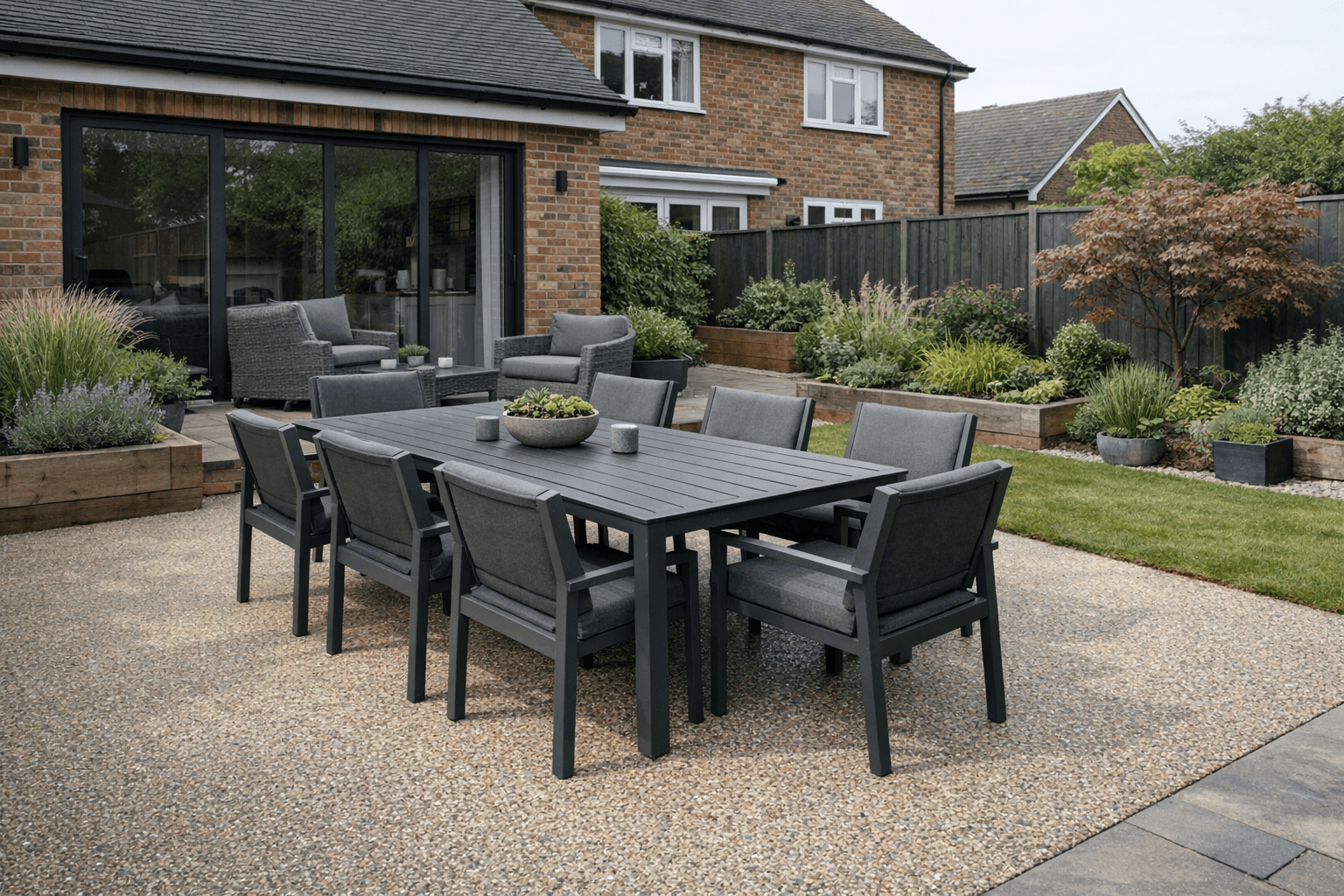
Modern patio designs favour clean lines, minimal joints, and a cohesive colour palette. Resin bound surfacing is ideal for this style because it creates a seamless, unbroken surface without the grid pattern of traditional paving.
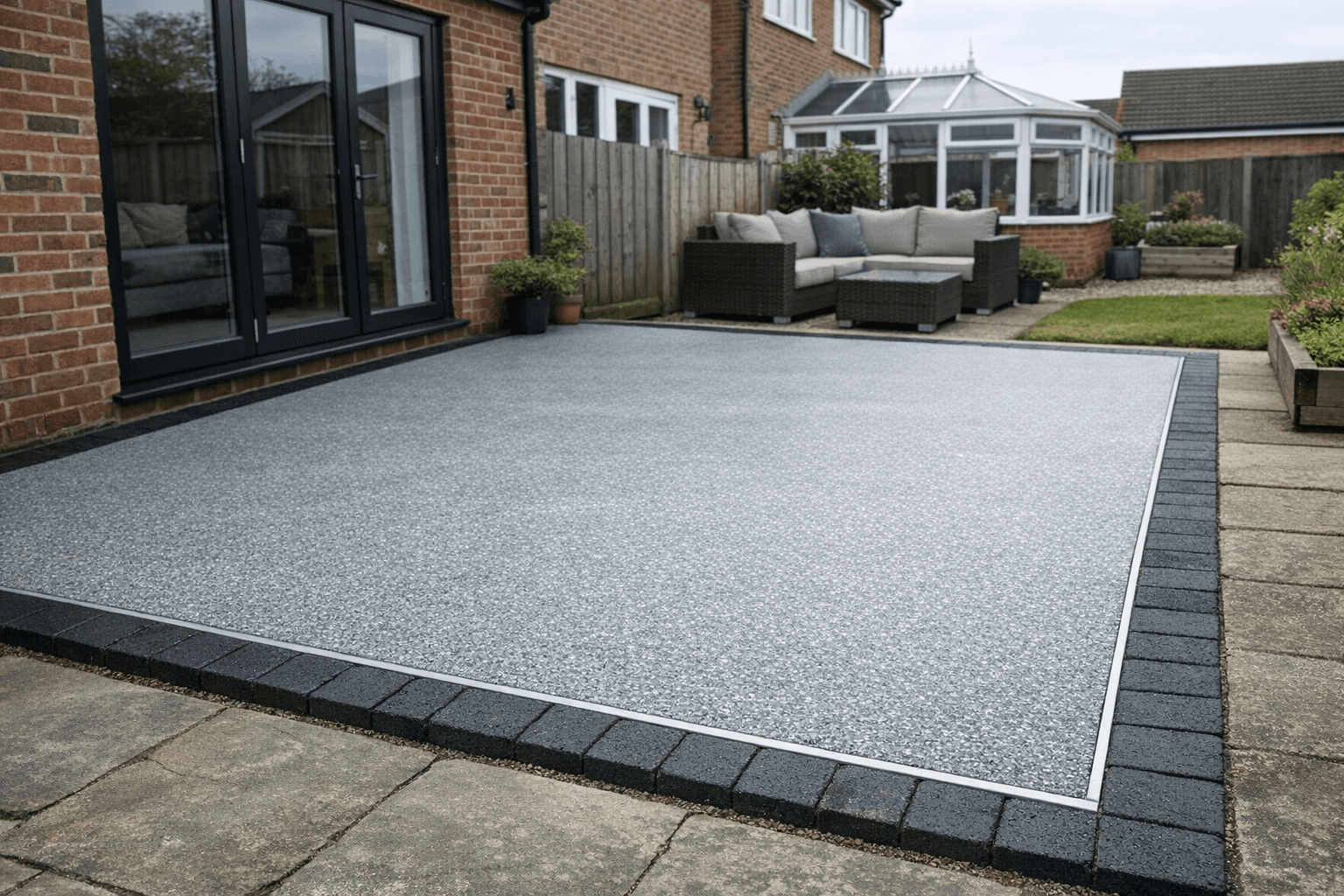
For a contemporary look, choose a single-colour aggregate in silver grey, anthracite, or cool charcoal. Pair it with aluminium strip edging for sharp, defined borders. The result is a sleek outdoor surface that complements modern architecture, glass extensions, and minimalist garden planting.
Geometric shapes work particularly well with resin. Square or rectangular patios with crisp 90-degree corners create a structured, architectural feel. Add recessed LED lighting along the borders for evening use, and the combination of smooth resin and subtle light creates a genuinely premium outdoor space.
Need colour and layout ideas that fit how you actually use your garden? Call 07413 521600 for free advice.
Grey Resin Patio Ideas
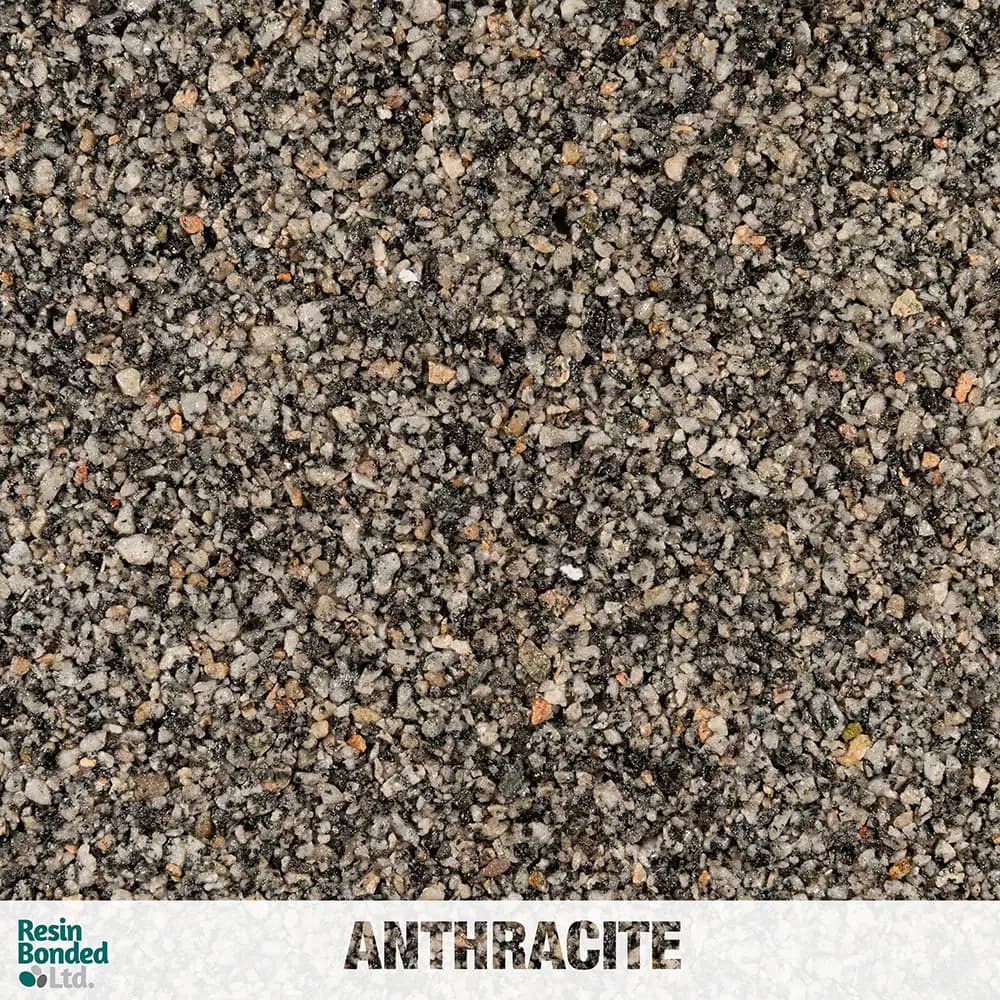
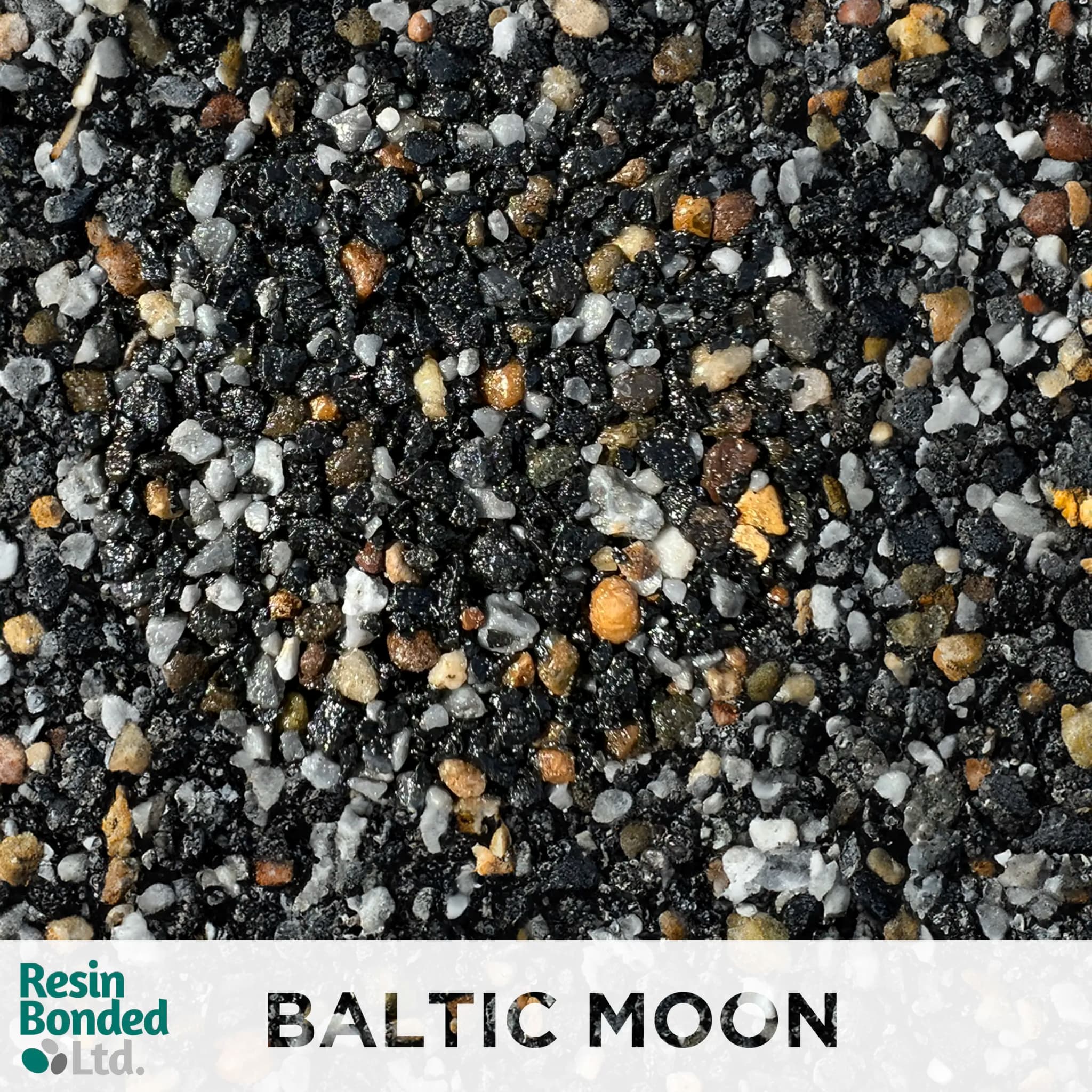
Grey is the most popular colour family for resin patios in 2026. The range available is far wider than most homeowners expect — from pale silver through mid-tone Nordic grey to deep anthracite and charcoal.
Silver grey resin patios work well with most UK house types. The light, reflective surface brightens smaller gardens and pairs naturally with green planting, timber fencing, and both light and dark building materials.
For more drama, a dark grey or anthracite patio creates a striking contrast with lighter garden elements — white render, pale gravel borders, or silver-leafed planting. Adding a contrasting light border to a dark patio creates visual definition and frames the space elegantly.
Resin Patio Colour Combinations
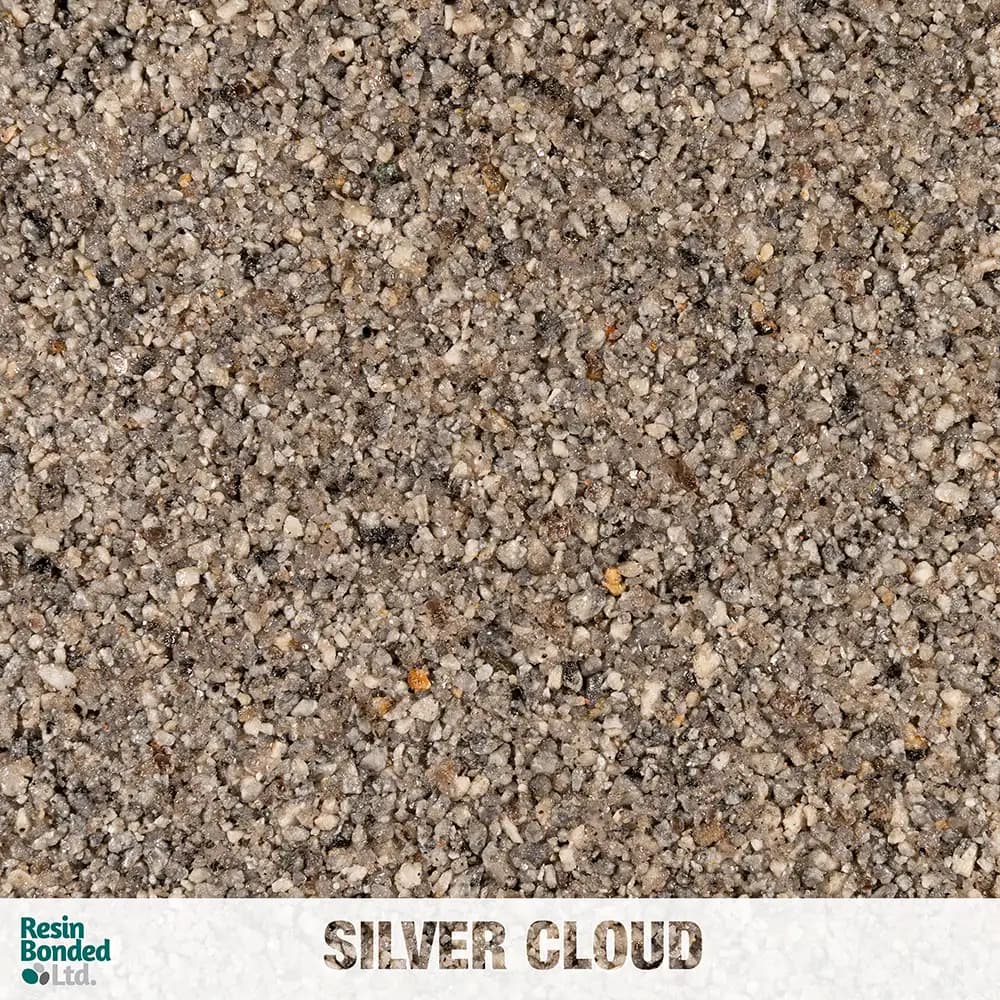
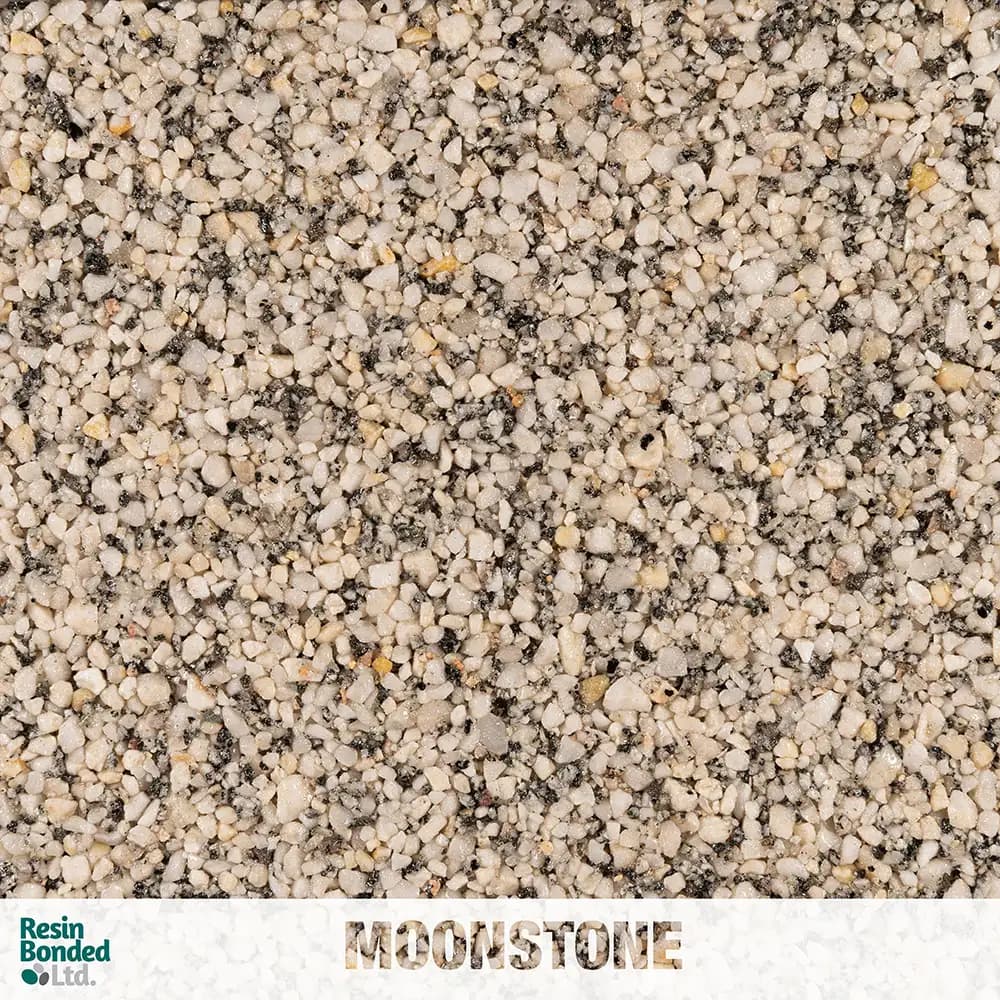
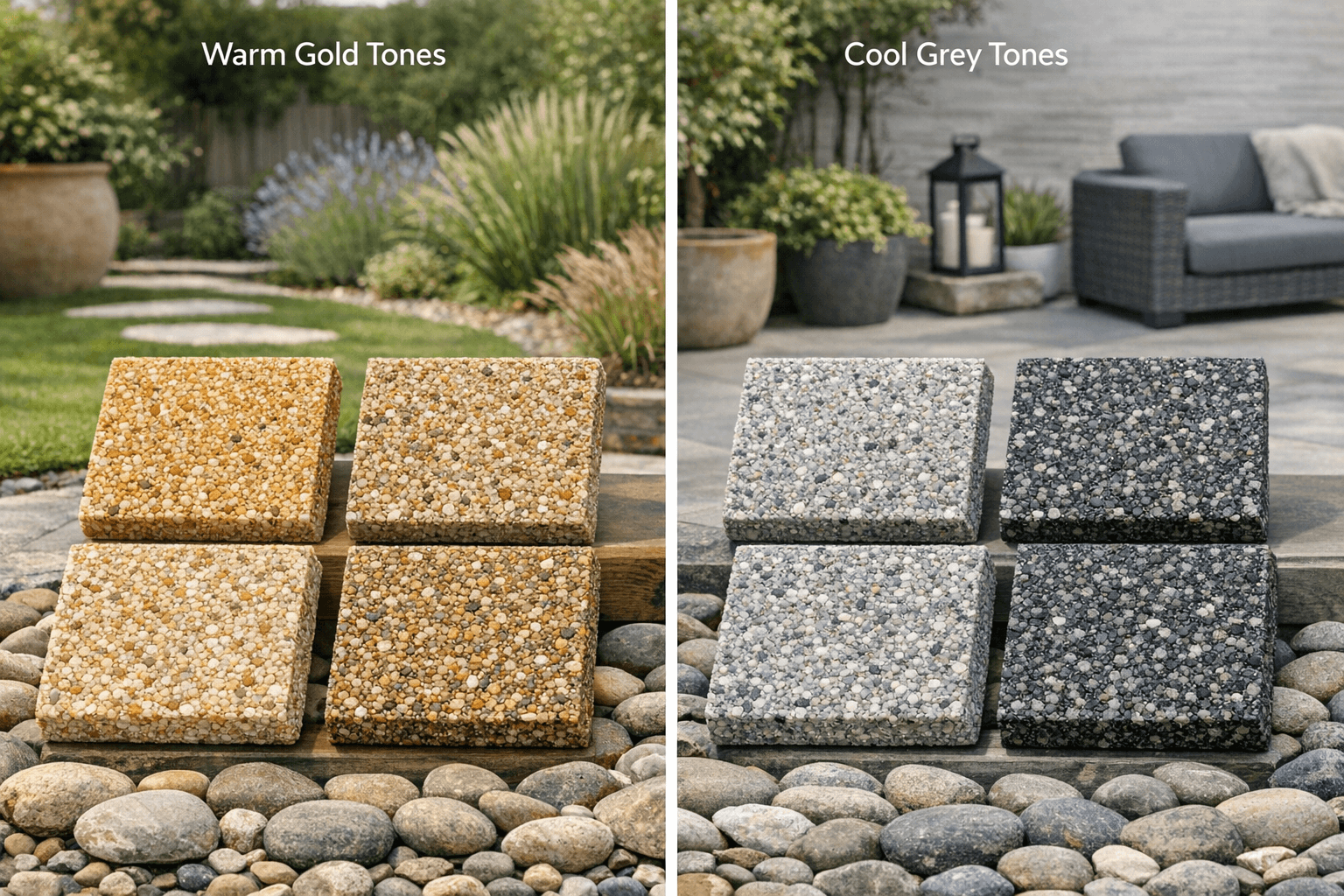
The colour range for resin patios is extensive. Natural stone aggregates offer warm golds, honey tones, silver greys, and deeper charcoals. Multi-tone blends that combine two or three aggregate colours add visual depth and character.
Warmer blends work beautifully with brick houses, timber garden structures, and natural planting. A mix of golden and copper tones creates a Mediterranean-inspired feel that works particularly well in south-facing gardens. Cooler tones complement modern architecture, painted render, and minimalist garden designs.
Border colours are just as important as the main surface colour. A contrasting border — dark charcoal around a golden patio, or warm bronze around a silver grey surface — adds definition and makes the space feel designed rather than simply surfaced.
Resin Patio Border and Edging Ideas
Borders transform a resin patio from a plain surface into a designed feature. The edging style you choose affects both the visual impact and the practical performance of the installation.
Aluminium strip edging gives the cleanest, most contemporary look. It creates a precise line between the resin surface and adjacent lawn, planting, or gravel. For a softer, more traditional feel, natural stone or brick edging ties the patio into existing garden walls or pathways.
Contrasting resin borders — using a different aggregate colour for the outer 150-300mm — are increasingly popular. This creates a picture-frame effect that defines the space and allows creative design touches without additional materials.
- Aluminium strip edging for clean, modern lines
- Natural stone edging for a traditional, warm feel
- Brick edging to match house brickwork and garden walls
- Contrasting resin border for a picture-frame design effect
- Flush steel edging for a minimal, almost invisible border
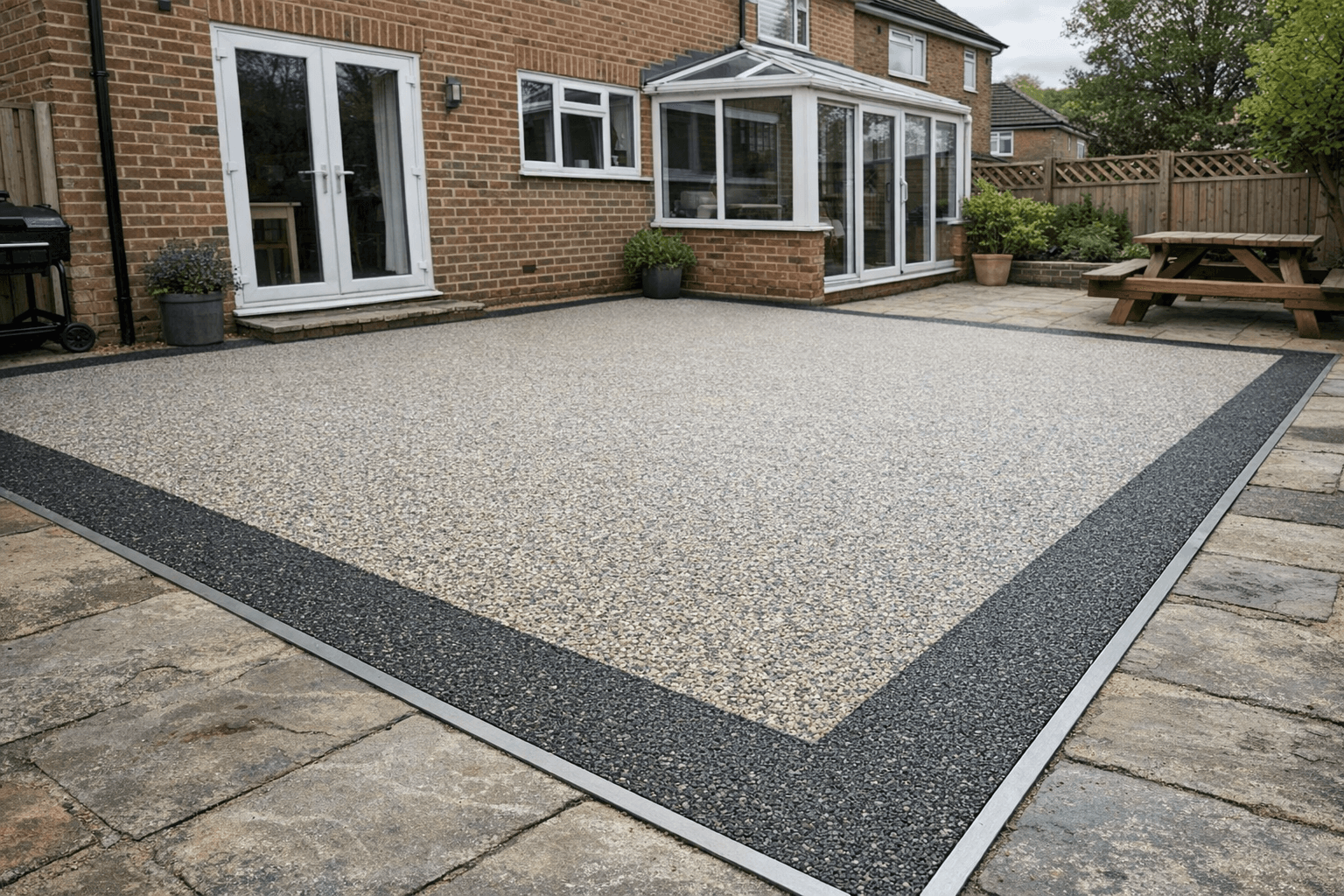
Layout Ideas for Different Garden Sizes
Think about how you use your outdoor space before choosing a layout. A dining area benefits from a generous, unbroken resin surface. A more organic garden design might use flowing resin paths that connect different seating and planting zones.
For small gardens, a single-colour resin patio in a light shade (silver grey or pale gold) maximises the sense of space. Avoid breaking the surface with too many borders or mixed colours. For larger gardens, zoning with different resin colours or contrasting borders helps define separate areas for dining, lounging, and planted sections.
- Small patios: light colours, minimal borders, seamless finish to maximise visual space
- Medium patios: define dining and seating zones with subtle colour changes
- Large patios: use contrasting borders to frame areas and add design interest
- Integrate planting beds and raised borders into the design for softness
- Use recessed lighting along edges for practical and atmospheric evening use
Plan a Patio That Works Year-Round
Get practical guidance on layout, edging, slip resistance, and drainage.
Practical Considerations
Resin patios need the same careful base preparation as driveways. If your existing patio slabs or concrete base is sound, a resin overlay may be possible — saving cost and disruption. If the base has failed, full excavation and a new sub-base will be required.
Consider access for furniture and garden equipment. Resin surfaces are durable but can be scratched by dragging heavy items. Using furniture pads and being mindful when moving planters or barbecues will keep the surface looking its best.
Drainage is rarely a concern with resin patios — the permeable surface handles normal rainfall naturally. For patios adjacent to buildings, ensure falls are directed away from the house and any DPC (damp-proof course) is maintained.