Permitted Development Rules for Driveways
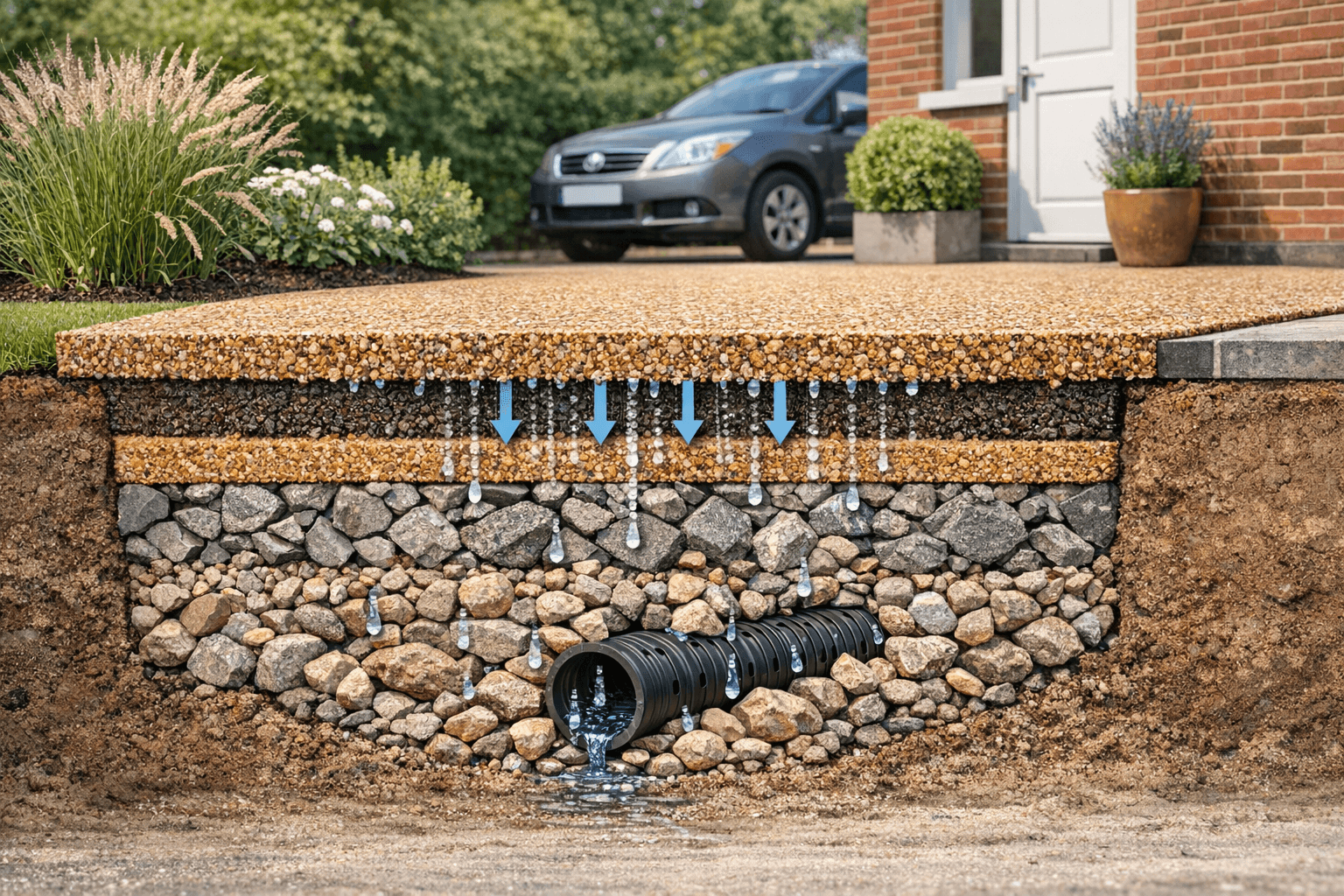
In England, you can usually replace or install a new driveway without planning permission under permitted development rights — but only if the surface is permeable or drains to a permeable area within your property boundary.
Resin bound driveways are inherently permeable. Water passes through the surface and drains into the ground below, which means most resin driveway installations qualify as permitted development without needing a formal planning application.
This rule was introduced in 2008 to reduce urban flooding caused by impermeable front-garden paving. It applies to houses, but flats and maisonettes may have different rules.
When You Might Need Planning Permission
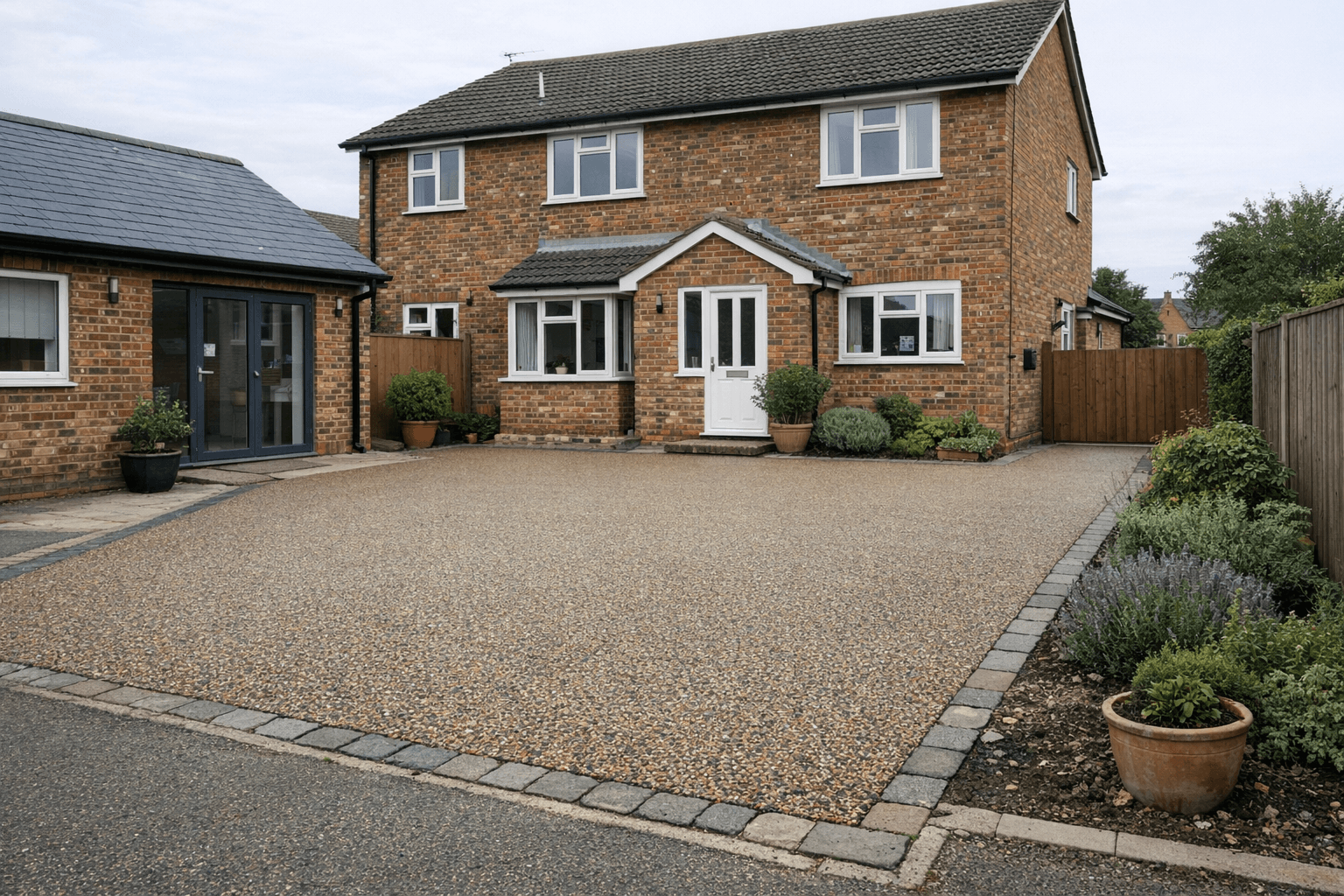
Planning permission may be required if your property is in a conservation area, is a listed building, or if the driveway project involves changes to the existing access from a public road.
If you need to create a new vehicle crossover (dropped kerb), this typically requires approval from your local highway authority, which is a separate process from planning permission but often runs alongside it.
- Listed buildings and conservation areas
- New or widened vehicle crossovers
- Properties with Article 4 directions removing permitted development rights
- Non-permeable surfaces exceeding 5 square metres
Need clarity on whether your driveway is permitted development? Call 07413 521600 for free advice.
SuDS Compliance and Why It Matters
Sustainable Drainage Systems (SuDS) are a set of approaches to manage surface water runoff. Resin bound surfaces are SuDS-compliant because they allow rainwater to soak through rather than running off into public drains.
Choosing a SuDS-compliant surface not only avoids the need for planning permission but also contributes to reducing flood risk in your local area. It can also be a positive feature when selling your property, as buyers and surveyors increasingly check drainage compliance.