How Resin Driveway Drainage Works
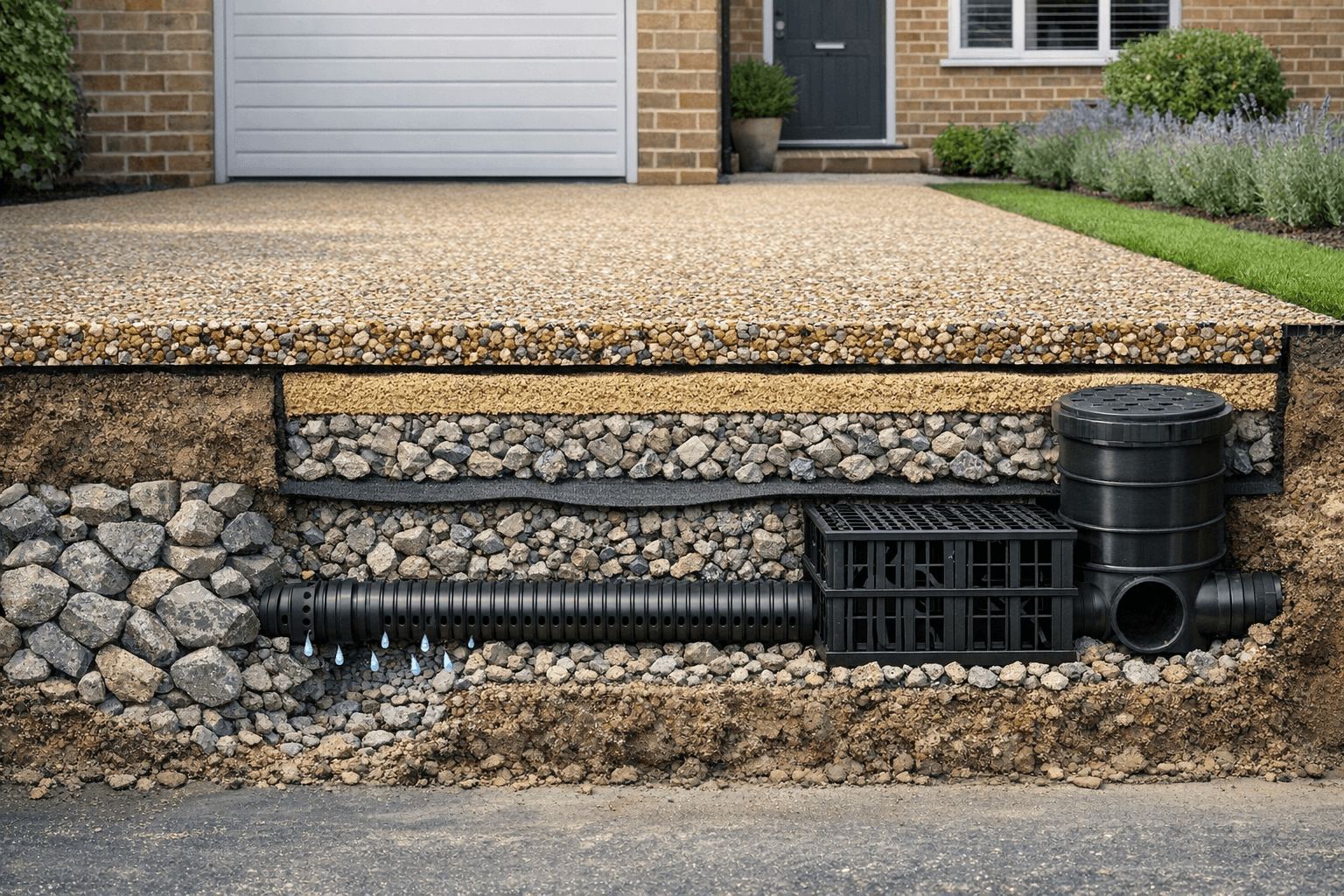
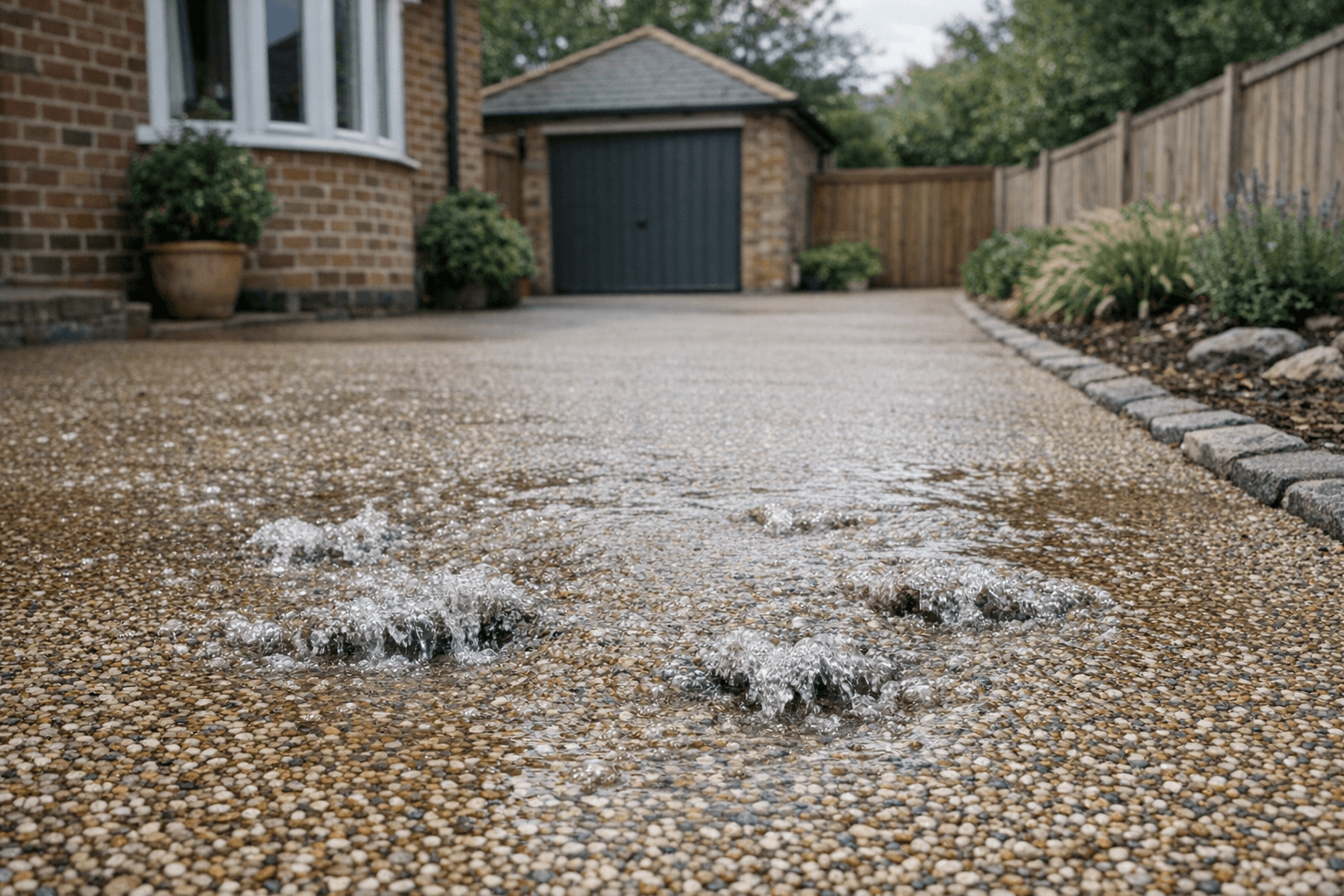
Resin bound driveways are permeable by design. The aggregate stones are coated in resin and laid with small gaps between them that allow water to pass through the surface layer and into the sub-base below.
This is fundamentally different from resin bonded surfaces, where aggregate is scattered onto a flat resin layer and the surface is effectively sealed. Only resin bound (mixed method) provides true permeability.
Water that passes through the resin surface enters the aggregate sub-base, where it either soaks into the ground naturally or is channelled to drainage points designed into the installation.
What Is SuDS and Why Does It Matter?
Sustainable Drainage Systems (SuDS) is a framework for managing surface water runoff in ways that reduce flood risk and pollution. Since 2008, UK regulations require that new or replacement driveways either use permeable surfaces or drain water to permeable areas within the property.
Choosing a SuDS-compliant surface like resin bound typically means you do not need planning permission for a front-garden driveway. Non-compliant surfaces (standard block paving, concrete, tarmac) require a planning application.
Beyond compliance, SuDS-friendly surfaces help reduce pressure on local storm drains, lower the risk of localised flooding, and allow natural filtration of pollutants before water enters the water table.
Need a quick SuDS compliance check for your driveway plan? Call 07413 521600 for free advice.
Designing Drainage Into Your Installation
Good drainage starts with the sub-base design. The aggregate layer should be graded to direct water flow away from buildings and towards suitable drainage outlets — either natural soakaway areas or purpose-built soakaways.
On properties with heavy clay soil, natural percolation may be slow. In these situations, additional drainage measures such as soakaways, French drains, or channel drains may be incorporated into the design to handle excess water.
- Sub-base graded to fall away from buildings
- Soakaways or French drains for clay-heavy ground
- Channel drains at transitions to impermeable surfaces
- Geotextile membrane to prevent soil migration into aggregate