
Why the Base Matters More Than the Surface
The base layer is the foundation of every resin driveway. A poorly prepared base is the number one cause of cracking, sinking, and water pooling — no matter how good the resin layer on top is.
Professional installers spend a significant portion of every project on base preparation because it determines the long-term performance of the finished surface. If an installer seems to rush through this stage, it is a warning sign.
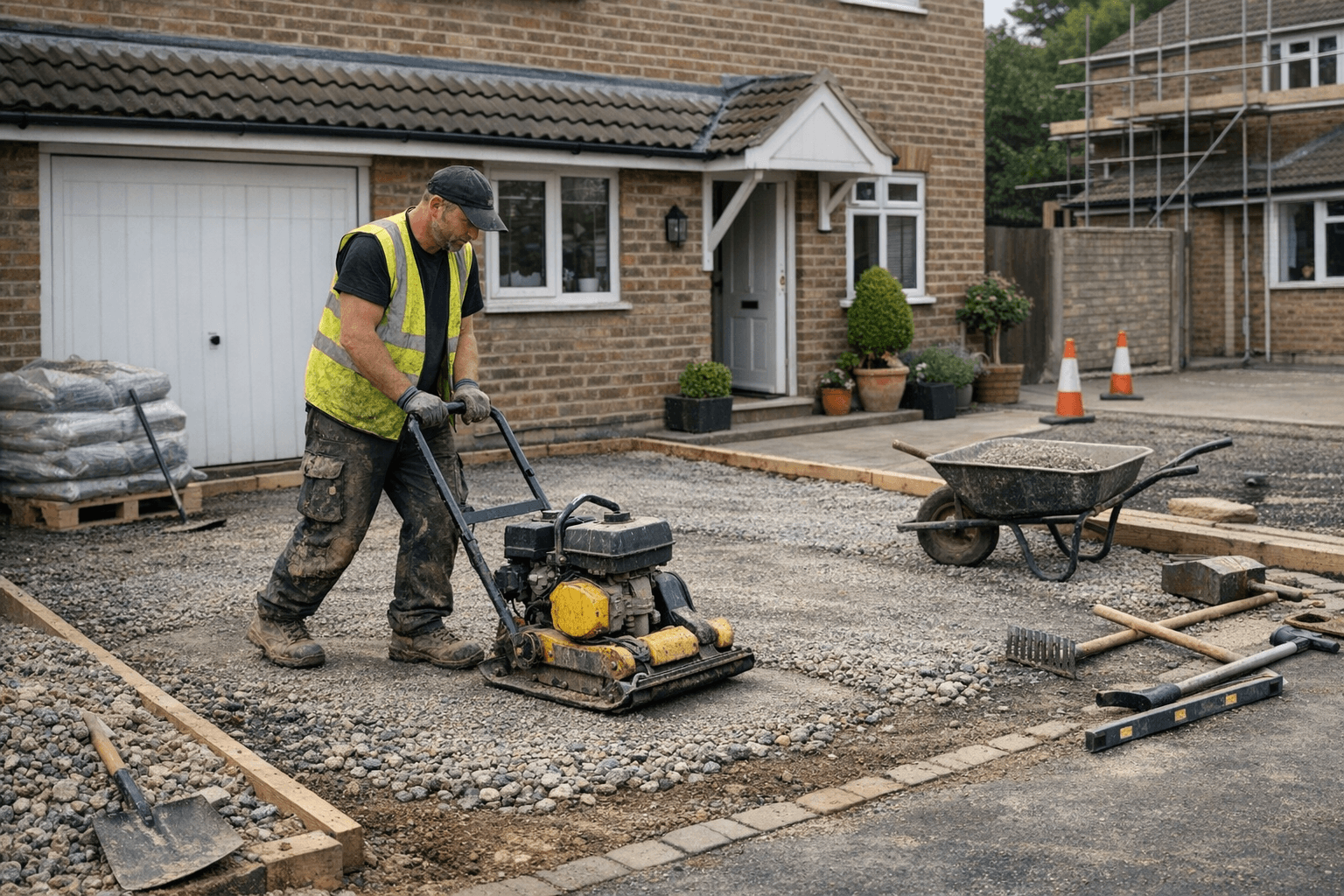
Existing Tarmac or Concrete as a Base
If your existing driveway surface is sound — no major cracks, no significant sinking, and reasonable drainage — it can often serve as the base for a resin overlay. This reduces cost and installation time because full excavation is not needed.
The existing surface needs to be clean, dry, and free of loose material. Minor cracks are usually repaired with a patching compound before the resin is applied. Larger defects may require localised excavation and patching.
A tack coat (primer) is applied to the existing surface to ensure the resin bonds properly. This is a critical step — without it, the resin layer can delaminate over time.
- Surface must be structurally sound with no major cracks
- Adequate drainage and no persistent pooling
- Clean and free of oil, paint, and loose debris
- Tack coat applied for proper adhesion
Not sure if your existing concrete or tarmac can be retained?
When a New Sub-Base Is Required
A new sub-base is needed when the existing surface is too damaged to overlay, when converting a garden or gravel area, or when the ground levels need adjusting for proper drainage.
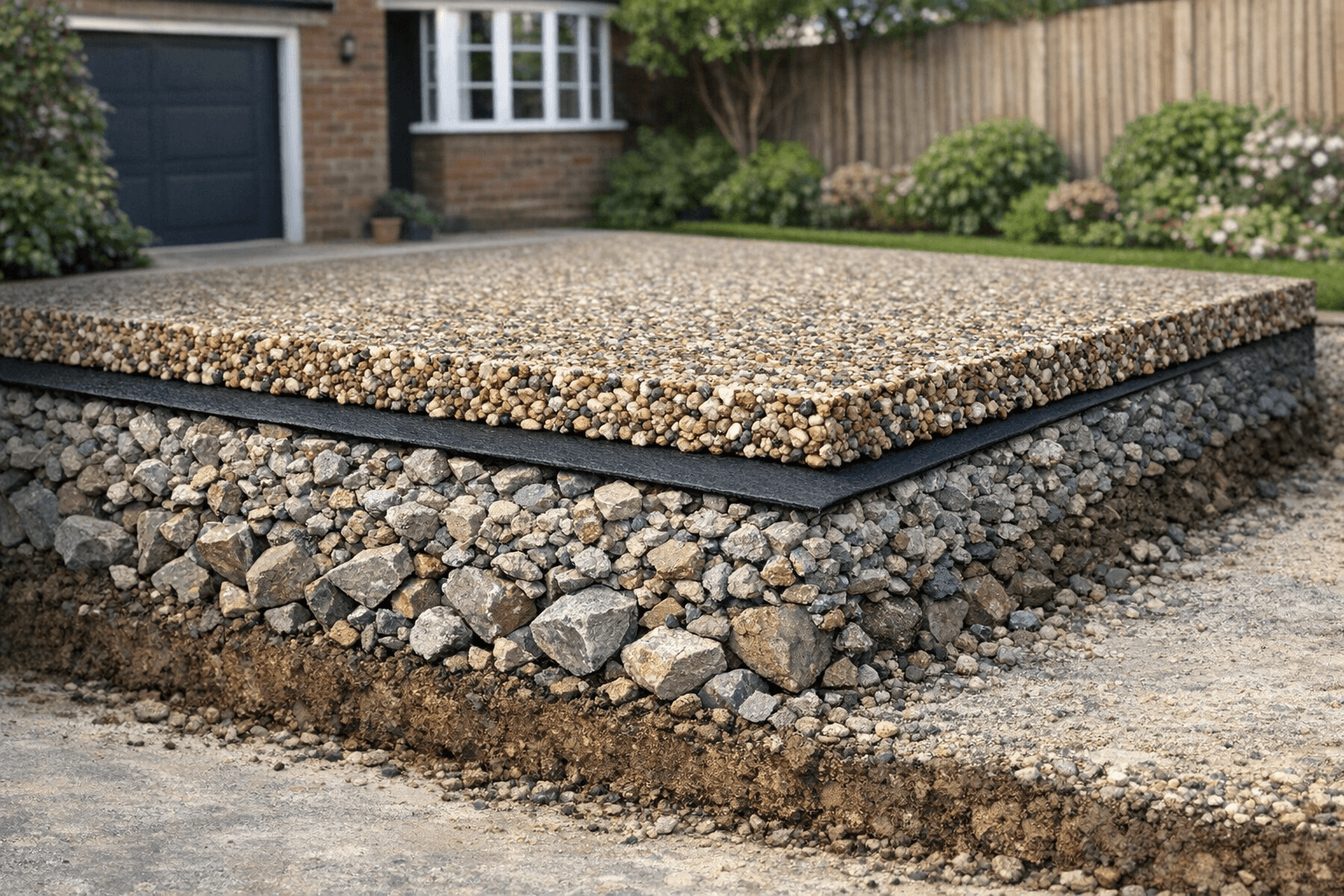
A typical new sub-base for a resin driveway consists of a compacted Type 1 MOT aggregate layer (usually 100-150mm deep) over a geotextile membrane. The membrane prevents aggregate mixing with the soil below and helps with drainage.
On top of the aggregate base, a layer of open-textured asphalt or a specialist resin-compatible screed provides the smooth, stable platform that the resin is applied to.
Drainage Considerations
Proper drainage starts at the base level. The sub-base should be graded to fall away from buildings and towards suitable drainage points. Resin bound surfaces are permeable, so water soaks through the surface and into the base layer.
If the underlying ground has poor natural drainage (heavy clay, for example), additional drainage solutions such as soakaways or channel drains may be needed to prevent water from sitting beneath the surface.