
Yes — With the Right Conditions
Resin bound can be successfully laid over existing concrete or tarmac, provided the base surface is structurally sound, reasonably level, and has adequate drainage. This is one of the most cost-effective ways to transform an old driveway.
Overlaying avoids the expense and disruption of full excavation. Installation is faster, waste removal is minimal, and the finished result is identical to a resin surface on a new sub-base.
Checking Your Existing Surface
Before an overlay can proceed, the existing surface needs careful assessment. Installers check for structural cracks, drainage issues, loose or crumbling material, and the overall levelness of the surface.
Hairline or surface cracks are usually acceptable and can be patched before resin application. Deep structural cracks that go through the full depth of the slab suggest the base has failed and overlaying is unlikely to produce a lasting result.
- No major structural cracks or subsidence
- Surface drains water away from buildings (even minor falls count)
- No persistent standing water or pooling
- Material is not crumbling, flaking, or delaminating
- Surface is reasonably level (small undulations are acceptable)
Unsure if your existing surface qualifies for overlay?
The Overlay Process
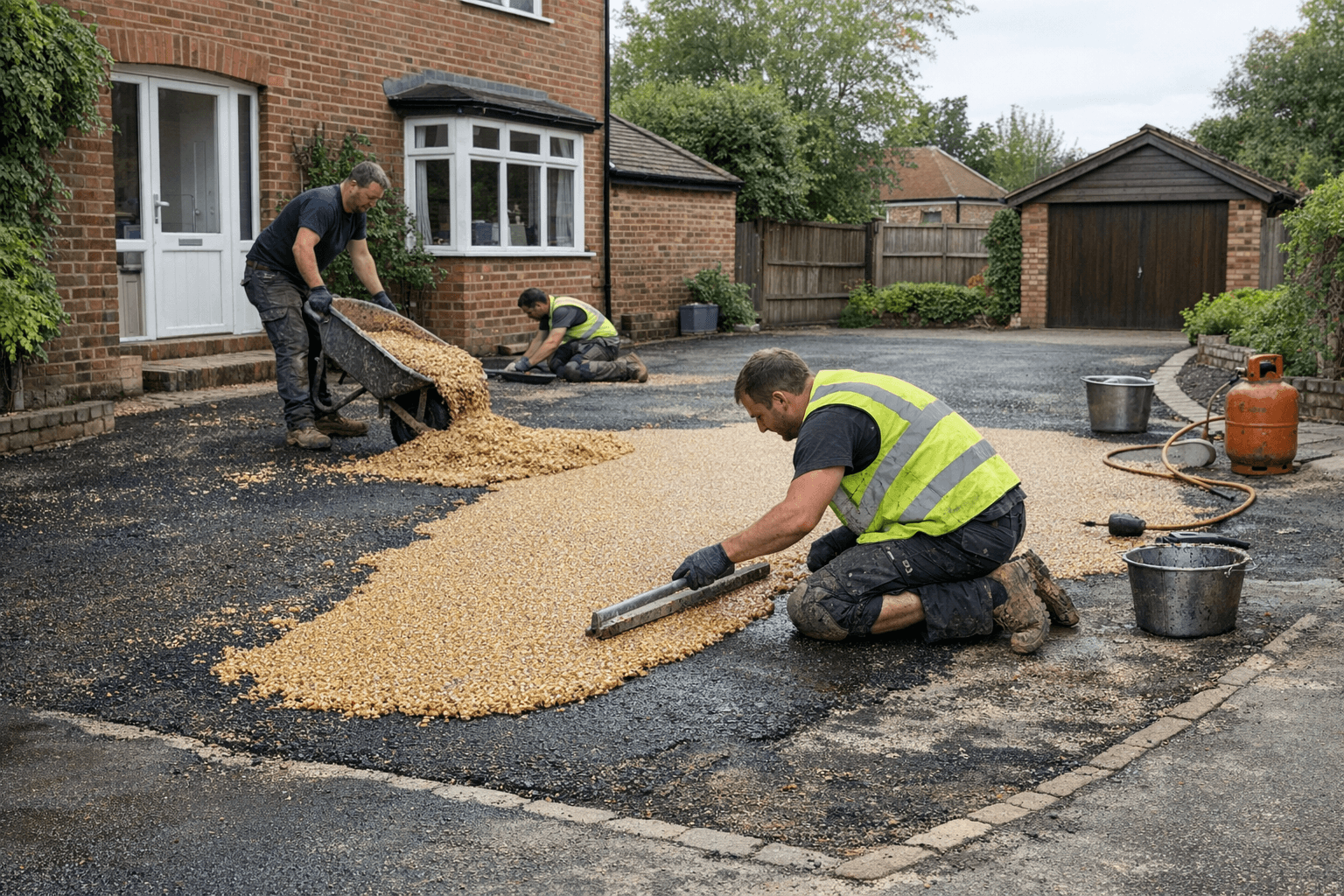
The existing surface is cleaned thoroughly — pressure washing removes dirt, moss, and loose material. Any repairs are made and a tack coat primer is applied to ensure the resin bonds securely to the base.
The resin and aggregate mixture is then trowelled across the surface at a typical depth of 15-18mm. Edge restraints (aluminium or timber) are set to contain the resin at perimeters and transitions.
Curing takes 4-8 hours depending on temperature, after which the surface can take light foot traffic. Full vehicle traffic is usually possible within 24 hours.
When an Overlay Won't Work
If the existing surface is badly cracked, heavily sunken, or has fundamental drainage problems, an overlay will only mask the issues temporarily. In these cases, excavation and a new sub-base are the better investment.
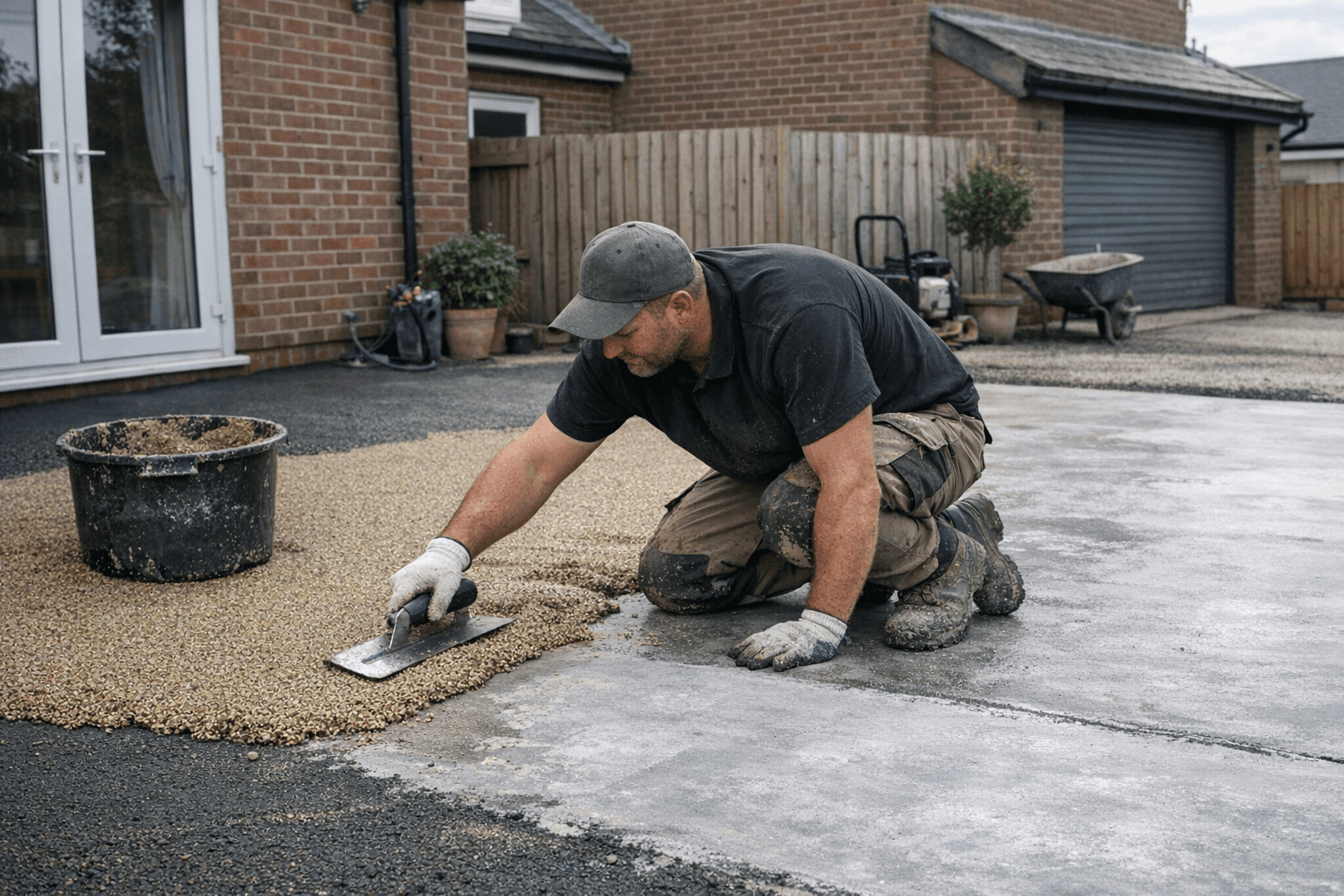
Very smooth, sealed concrete surfaces can sometimes struggle to bond with resin. Mechanical preparation (shot-blasting or grinding) may be needed to create a roughened surface for the primer to key into. Your installer can assess this during the initial survey.