
Cost Comparison: Tarmac vs Resin
Tarmac is typically the cheaper option upfront. A standard tarmac driveway often starts around £45-£65 per square metre, while resin bound installations commonly start from around £65 per m2+. For a typical 50m2 driveway, the upfront difference is often in the low-thousands depending on specification.
However, the cost gap narrows when you factor in longevity and maintenance. Tarmac surfaces may need patching, re-sealing, or full resurfacing sooner than resin, which typically maintains its appearance and structure for 15-25 years with minimal upkeep.
Appearance and Kerb Appeal
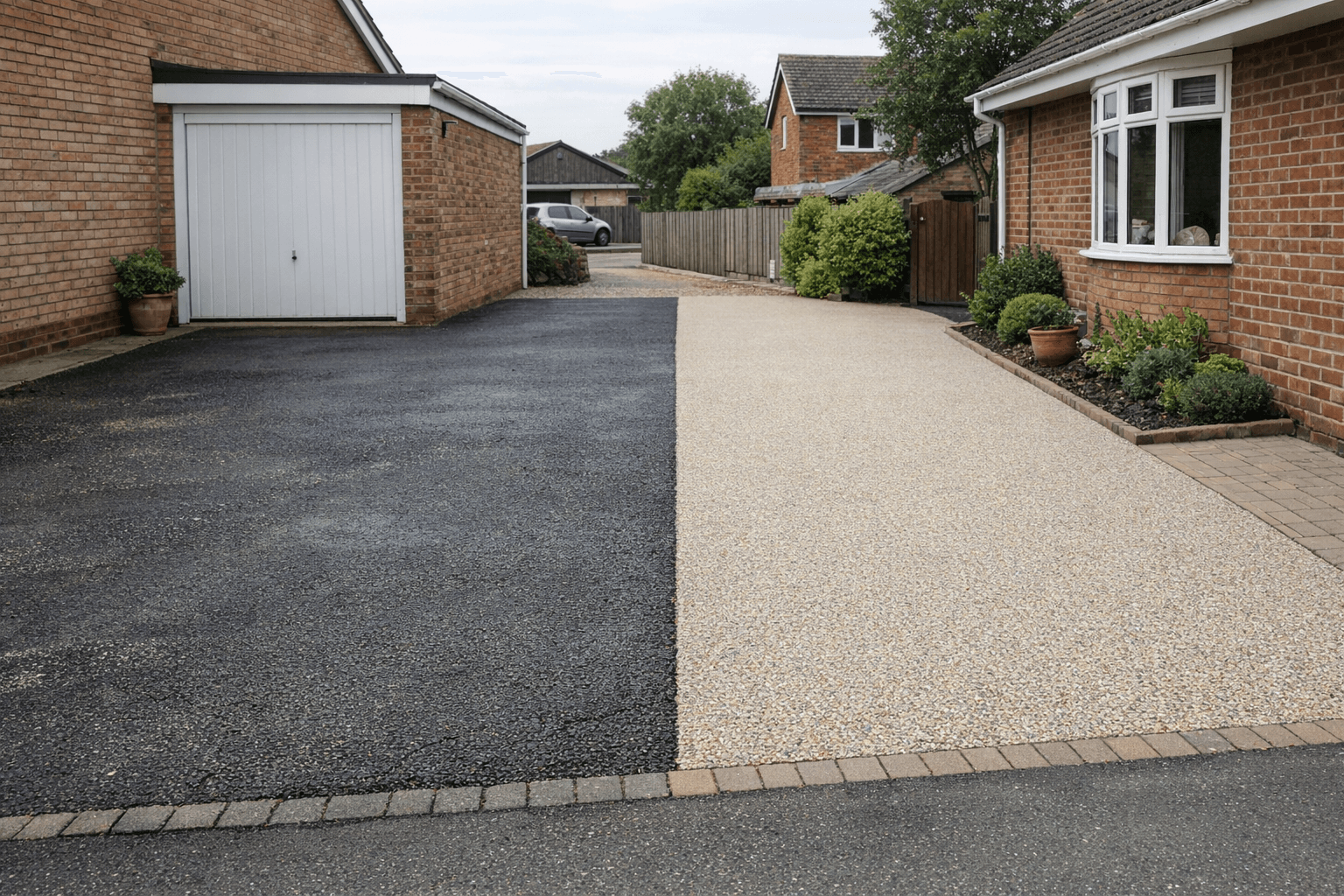
This is where resin and tarmac differ most dramatically. Tarmac provides a plain black surface that is functional but offers limited visual appeal. Over time, it fades to grey and can develop an uneven, patchy appearance.
Resin driveways offer a wide palette of natural aggregate colours and the seamless finish gives a clean, contemporary look. For homeowners who value kerb appeal, resin is typically the stronger choice.
Estate agents consistently report that a well-finished resin driveway can enhance a property's perceived value and first impression, while tarmac is seen as a basic, utilitarian surface.
Not sure which option gives better long-term value for your frontage? Call 07413 521600 for free advice.
Durability and Maintenance
Tarmac is robust under heavy traffic and is commonly used for roads, so durability under vehicle weight is not a concern. However, it softens in extreme heat, can be damaged by fuel spills, and develops cracks over time as the bitumen binder ages.
Resin driveways are resistant to oil and fuel stains (if treated promptly), maintain their colour with UV-stable resins, and do not soften in heat. The main durability risk is poor base preparation, which is an installation quality issue rather than a material limitation.
- Tarmac: robust but fades, softens in heat, cracks with age
- Resin: colour-stable, stain-resistant, requires good base
- Both need periodic cleaning for best appearance
- Tarmac may need resealing every 3-5 years for best results
Making the Right Choice
Choose tarmac if budget is the primary concern and visual appearance is secondary. Tarmac is a practical, proven surface that does the job reliably at a lower cost.
Choose resin if you want your driveway to enhance your property's appearance, prefer low maintenance, and value SuDS-compliant drainage. The higher initial cost is typically repaid through longer lifespan and lower upkeep costs.